


Empowerment Through Edges: How Women Choose Knives
I’ve spent years helping enthusiastic home cooks and culinary professionals fall in love (or back in love) with their kitchen practice, by connecting with their creativity, learning simple, traditional skills, mindfulness, and simple tools used with intention. For me, simple doesn’t mean “cheap” or uncomplicated: Simple tools in my world are those absolutely necessary things in our kitchens that we reach for again and again: a favorite mixing bowl, a trusty wooden spoon, and of course, knives.
For many of the home cooks I work with, the knives they use are simply the ones they purchased at some point or were given, but they aren’t always the best knives for the job. But what if we considered why we use the knives we use? Does it fit my hand well? Does it feel good to use? Is it the right size for the kinds of things I cut? This is what I mean by simple tools, used with intention. When we fill our kitchens with tools we love to use, that work well for how we cook, the process of cooking becomes so much richer.
We’re all familiar with the iconic image of Julia Child proudly holding up her kitchen knife on set, getting ready to make some culinary magic. Child is a modern day legend, and one small part of her legacy has to do with teaching home cooks how to properly use their kitchen knives.
While the story of women and our kitchen knives stretches back many centuries and across continents, it’s still filled with mysteries, as women, though preparing the lion’s share of food in many cultures, also didn’t often have our stories recorded. Today, that’s changing, as we learn more about the history behind our food and the people who made it. And are more committed than ever to telling as many of those stories as we can.
The ancient origins of modern knives

Humans have been fashioning various materials, including stone and shells, into sharp-edged tools for almost 3 million years! Some of the earliest examples are Oldowan stone tools, which come from eastern Africa, and were used for cutting food and for hunting as well as for various other tasks.
Photo: Stone Tool Finds by Andy Carter
But the metal knives as we know them today originated more recently, beginning with single-edged knives in the Bronze Age, and gradually progressing to iron and steel with new technological innovations in metalsmithing and a wider variety of blade shapes and sizes. It’s unclear where and when modern western chef’s knives came about, but their shape is echoed in archeological evidence from Ancient Rome onward.
In Japan, the history of Japanese knives goes back over 1200 years, and is rooted in the traditions of samurai sword makers.
Women and knives in kitchens around the world
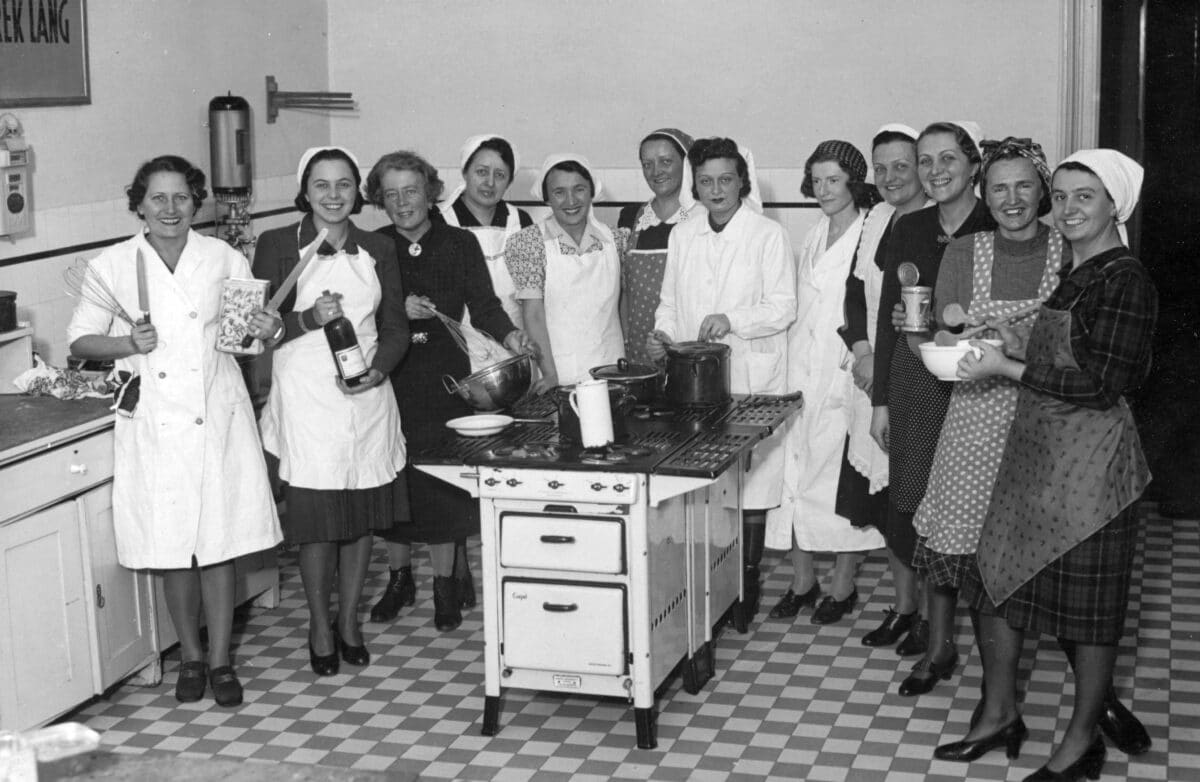
Kitchen work, at least in the home, has for most of history been relegated to ‘women’s work,’ an unpraised but essential part of each of our lives. Nowadays we’re acknowledging the real work entailed in domestic labor more than in the past, and the domestic labor of many women who were forced to not care for their own families in order to care for someone else’s.
But what exactly did their day to day kitchen work look like? The exact tools used depend on where and when you look, of course, but the basic elements remain the same as today: Sharp-edged tools for cutting (like knives and cleavers), heat (like an open fire or a stove), and the various pots, pans, and utensils that make cooking possible.


In 16th century Germany, it was assumed many people who have at least one knife (or several), and sometimes guests were expected to bring their own cutlery to dinner rather thanit being provided by the hostess. Since knives were expensive, women in many households made do with what they had, while wealthy households might have purpose-built knives for different tasks: A long knife for cutting up meat, a cleaver, or a fish-gutting blade, for example. The more specialty knives you had, the more a sign of status it was. This meant that what knives a woman used daily had to do more with class than anything else. The modern German chef knife evolved from Medieval (and possibly earlier) knife shapes, and came into being in the 18th century, giving us the German knives we know today, with heavy, thick double-edged blades and a curved profile to facilitate rocking the knife on a cutting board.

The variety of kitchen knives in Japan increased around the same time. In the 16th century, during the Edo period, skilled craftspeople who specialized in sword making began to branch out into different types of blades, including kitchen knives and sashimi knives. This meant women cooking at home, especially those wealthy enough to afford multiple knives, had access to more knives for different tasks, from all-purpose blades like Santoku knives to specialty blades like the Nakiri, which is perfect for vegetables, including slicing greens.
Japanese knives are traditionally single-edged (though some modern styles include a double edge), and are lighter weight and made of harder steel than their German counterparts.
Choosing knives in the past and today
The knives we choose in many cases have to do with practicality and accessibility, and the same was true for our ancestors.
The knife a cook chose, like many other kitchen implements, would depend on how well it could perform the specific tasks she needed it for. A meat cleaver is great for, well, meat, but if you’re finely dicing a lot of vegetables? You might need something a bit more delicate with a thinner blade.
However, the perfect knife in the world won’t do anything for you if you have no way to get it. For example, if the cost is prohibitive, you’re likely to choose a more affordable option, even if it’s not quite the right fit. Especially in the past, when fewer styles were available and knives were more costly, women cooked with what was to hand.
The same considerations we have in selecting knives today were considerations our ancestors had in the past! There is a big difference, though: We can purchase knives more easily and in a wider variety, than before.
With all the choices available to modern cooks, it can feel overwhelming to pick the perfect blade. The best place to start is to think about what you’ll be using your knives for (and consider having different knives for different purposes, if you regularly cook a variety of foods). For example, if you’re julienning or finely dicing lots of vegetables, a Japanese-style Nakiri knife would be a perfect choice. Having a couple of all-purpose knives, and any specialty blades you might need (think paring knives for small, precise work or a bread knife for, well, bread), means you’ll always have the right knife.
In Partnership with ShunKai.USA
Choose a knife that fits comfortably in your hand, feels well-balanced, and that has a comfortable weight: while heavier knives have their place, for lots of consistent knife work, a lighter weight can help keep your arm from getting tired.
Footnotes:
Julia Child on American Masters, PBS
Les Dames D’escoffier NYC: Stirring the Pot
What does “julienne” mean in cooking?
Bright and Spicy Pickled Carrots: Quick or Fermented

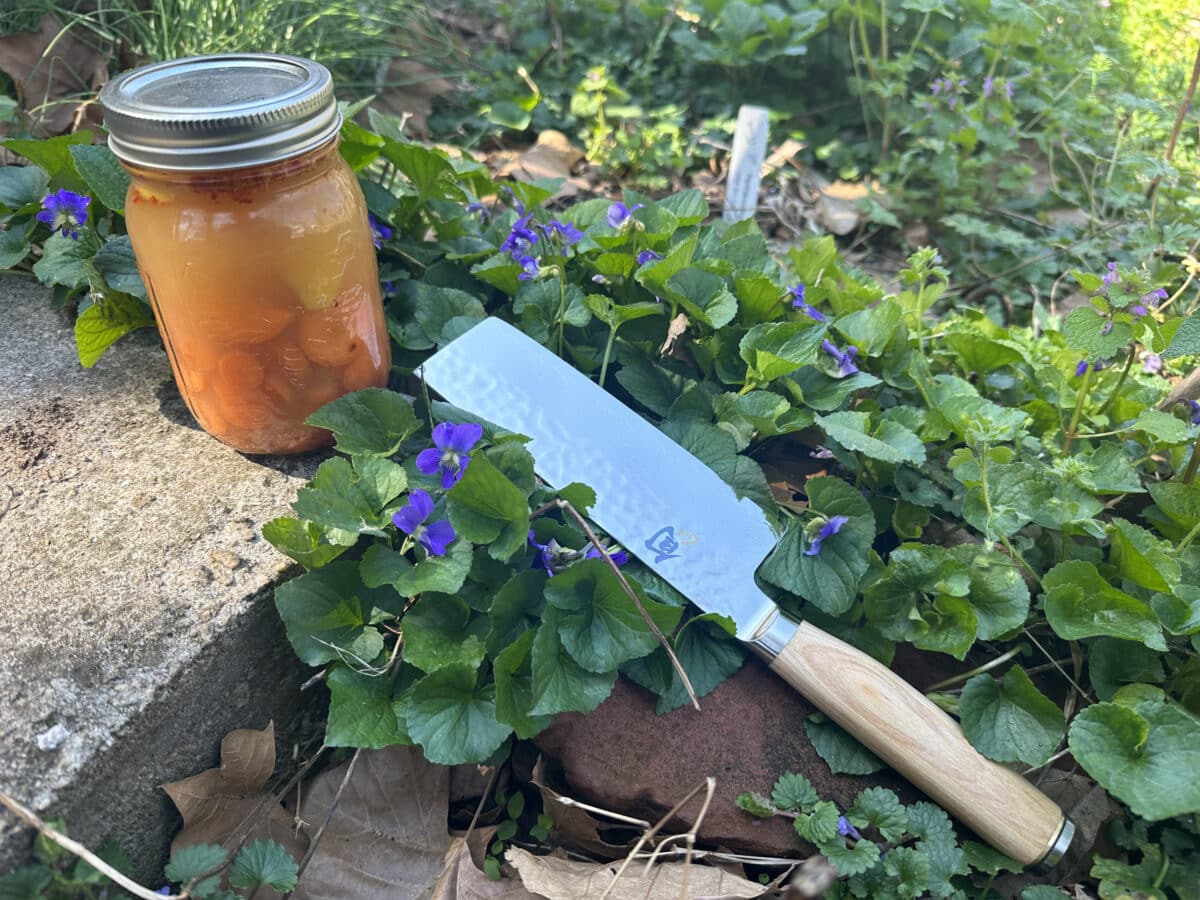
Bright and Spicy Quick Pickled Carrots are one of my very favorite pickles to teach to beginners.
They stay crisp, have great flavor, are easy to work with, and are usually inexpensive and easy to source. These pickles shine thanks to the addition of bright, zesty lemon peel and a kick from crushed red pepper. They’re the perfect topping for summer grilled meats, sandwiches, and salads, or just eaten straight from the jar!
There are two ways to create pickled vegetables, with and without vinegar.
Follow the first recipe for the quick pickles that are made with vinegar and can be eaten within 24 hours, offering a fast option.
The fermented pickle method that follows takes at least several days to be ready to eat. The longer they ferment, the more sour they become.
The health benefits of fermented pickles include improved digestive health due to the presence of live bacteria. Quick pickles, while still healthy, do not offer this probiotic benefit.
Ingredients
QUICK Pickled Carrots
- •473 ml (1 pint) mason jar with lid and band
- •2 large carrots, scrubbed, peeled or unpeeled, sliced into .3 cm (1/8-inch) rounds
- •Two to three 2.5-5 cm (2-inch) strips lemon peel
- •2.8 grams (1/2 teaspoon) crushed red pepper
- •237 ml (1 cup) water
- •237 ml (1 cup) apple cider vinegar
- •16 grams (1 tablespoon) fine salt
- •10 grams (2 teaspoons) granulated sugar
Tip: Save your carrot tops and blend up into a green, delicious pesto or dressing!
Optional, editor’s suggestion: You may want to add 1/2 tsp of sugar and additional herbs to flavor pickles.


Preparation
For quick carrot pickles:
- Slice your carrots into 1/8 inch rounds (you can peel them or leave them unpeeled: just be sure to scrub them first!) Put into the mason jar along with the lemon peel and red pepper.
In a small saucepan, combine 237 ml (1 cup) water, vinegar, salt, and sugar. Place over medium heat, stirring until salt is completely dissolved.
Pour the warm brine mixture over the carrots until completely covered. Allow to cool completely, then top with the lid and place in the refrigerator.
Refrigerate for about 24 hours or until carrots are pickled through. Store finished pickles covered in the refrigerator, where they will keep for several months.
For fermented carrot pickles:
1. Slice your carrots into 1/8 inch rounds (you can peel them or leave them unpeeled: just be sure to scrub them first!) Put into the mason jar along with the lemon peel and red pepper as in recipe above.
- Omit the vinegar and replace with a second cup of room temperature water.
- Reduce the salt to 7.5 ml (1/2 tablespoon) and optionally add 15-30 ml (1-2 tablespoons) fresh herbs.
2. Whisk salt into the 2 cups of room temperature water in a food safe container, until dissolved. If you prefer, you can also heat both to dissolve salt, then cool to room temperature.
3. Pour the brine mixture over your carrots until completely covered. Screw on the jar’s lid, then place the jar on a plate or tray out of direct sunlight.
4.. Allow to ferment at room temperature for 4-7 days, loosening the band on the lid each day to release any built up pressure. Very gently shake or stir your jar once a day, which disrupts the surface and keeps mold from growing on any herbs or pepper flakes that float to the top.
4. The pickles are done when they’re as sour as you like: the longer you ferment them, the more sour they become. Store finished pickles covered in the refrigerator, where they will keep for several months.

