


“Ek chingari hi kaafi hai, andhera mitaane ke liye.”
“A single spark is enough to erase the darkness.”
—Rahul Sankrityayan
That’s how I think of tadka.
A single spark.
A holy crackle that changes everything.
If you’ve ever heard mustard seeds pop in hot oil or smelled garlic just as it begins to brown, then you’ve witnessed the beginning of transformation.
Tadka, also known as chaunk, baghaar, or phoron depending on the region, is the practice of tempering spices in hot fat, usually ghee or oil, to awaken their essential oils and release their deepest flavors. You pour this aromatic oil over cooked lentils, vegetables, or curries, and suddenly the dish isn’t just food anymore. It’s alive.
It’s the difference between flat and full-bodied.
Between a whisper and a song.
It’s alchemy.
And it’s sacred.
The first time I heard the word tadka, was from Indira. I needed to learn more so I researched it only to find more confusion on why this technique was so important.
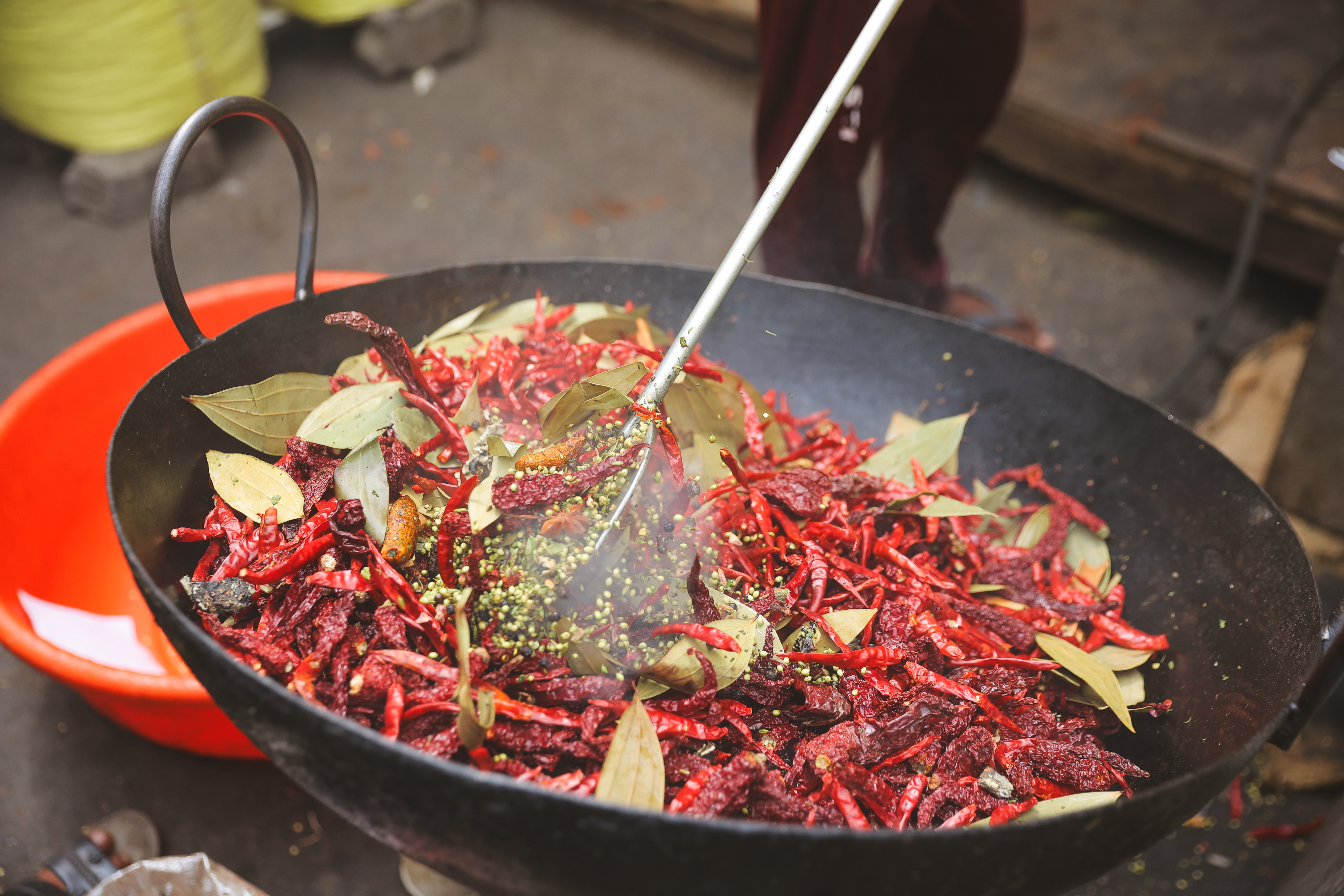
Finally, I decided that it was time to try it. I heated ghee until it shimmered, then dropped in jeera (cumin seeds). In seconds, they began to dance, popping, fizzing, releasing smoke and scent that seemed older than language. She added hing (asafoetida), then dry red chilies, and finally kari patta (curry leaves), which hit the oil like fireworks sending drops of oil all over my kitchen.
It startled me.
It always does.
Here’s the science.
When spices hit hot fat, around 180 to 200°C, they bloom. Fat acts as a solvent, extracting fat-soluble compounds like terpenes, phenols, and essential oils that water simply can’t touch. This process unlocks flavor, aroma, and even digestibility. Some spices, like mustard seeds, contain allyl isothiocyanate, which only activates when exposed to heat.
That sharp, nose-tingling scent? That’s chemistry doing its job.
But here’s what no science textbook will tell you.
Tadka is time travel.
It carries memory. Culture. Spirit.
You can’t rush it. You can’t fake it. And if you’re not present for it, the whole dish suffers.
In Ayurveda, food is more than fuel, it’s medicine, vibration, prana. When you perform tadka, you’re not just cooking. You’re consecrating.
And like any ritual worth its salt, it begins with fire.
I often compare tadka to a firework because that’s exactly what it feels like. A tightly wound moment of tension, followed by an explosion of energy and light.
You heat your oil. You wait.
There’s a silence, sannata.
Then:
Pop. Crackle. Hiss.
Jeera pops like firecrackers in Delhi. Hing makes the room smell like temples and train stations. Curry leaves hiss like they’ve been waiting their whole lives for this stage. The smell rises and wraps around you like memory.
It hits the back of your throat. It opens your eyes. It pulls you into the now.
This is presence. This is prayer.
There are rules, but they aren’t rigid. More like whispers passed down from mother to daughter, from one kitchen to another.
You never walk away during tadka.
You always keep your ingredients ready and you are focused and present.
You listen to the oil. It will tell you when it’s ready.
Add spices too early and they’ll turn bitter. Too late and they’ll burn. There’s a narrow window, mere seconds where everything aligns.
That window is everything.
In that space, you learn attention. You learn humility.
Because you will mess it up. And when you do, the dish will let you know.
But when you get it right?
It’s magic.
A simple bowl of dal becomes something you want to write poems about.
A humble vegetable fry becomes rich with depth and heat.
Even plain yogurt, hit with a mustard seed and curry leaf tadka, suddenly wears a crown.
Over the years, I’ve tried to teach this to my cooks back home in New Hampshire.
Some get it. Most try to overcomplicate it.
They want measurements. Timers. Metrics.
But tadka doesn’t live on a spreadsheet.
It lives in your senses. In your intuition and building that intuition takes time, a gift not allotted to professional kitchens.
It’s like love that way.
Too fast and you scorch it. Too slow and it cools off.
You’ve got to be there. Fully.
Not thinking about the next dish or the unpaid bill or the text you’re waiting on.
Just you. The pan. The heat. The holy crackle.
I once asked Indira, my first mentor who changed my life, why she still insisted on doing tadka by hand every day, why not buy pre-made infused oils or spice blends?
She looked at me like I’d asked why she bothered breathing.
“Tadka bina, sab kuch pheeka hai.”
(Without tadka, everything’s tasteless.)
I think about that a lot. Not just in the kitchen. In life.
We rush through our days. We skip the small rituals. We throw ingredients into the pan and hope they figure themselves out. But maybe we need that pause. That sacred sizzle. That moment to say,
“I’m here. I care. Let’s begin.”
Because tadka isn’t just a cooking technique.
It’s a reminder.
That before transformation, there must be stillness.
Before flavor, there must be fire.
And before nourishment, there must be love.
So the next time you make dal, don’t just throw ghee in a pan and call it done.
Stand at the stove.
Feel the heat rise.
Listen for the first pop.
And when it comes, let it awaken something in you, too.