


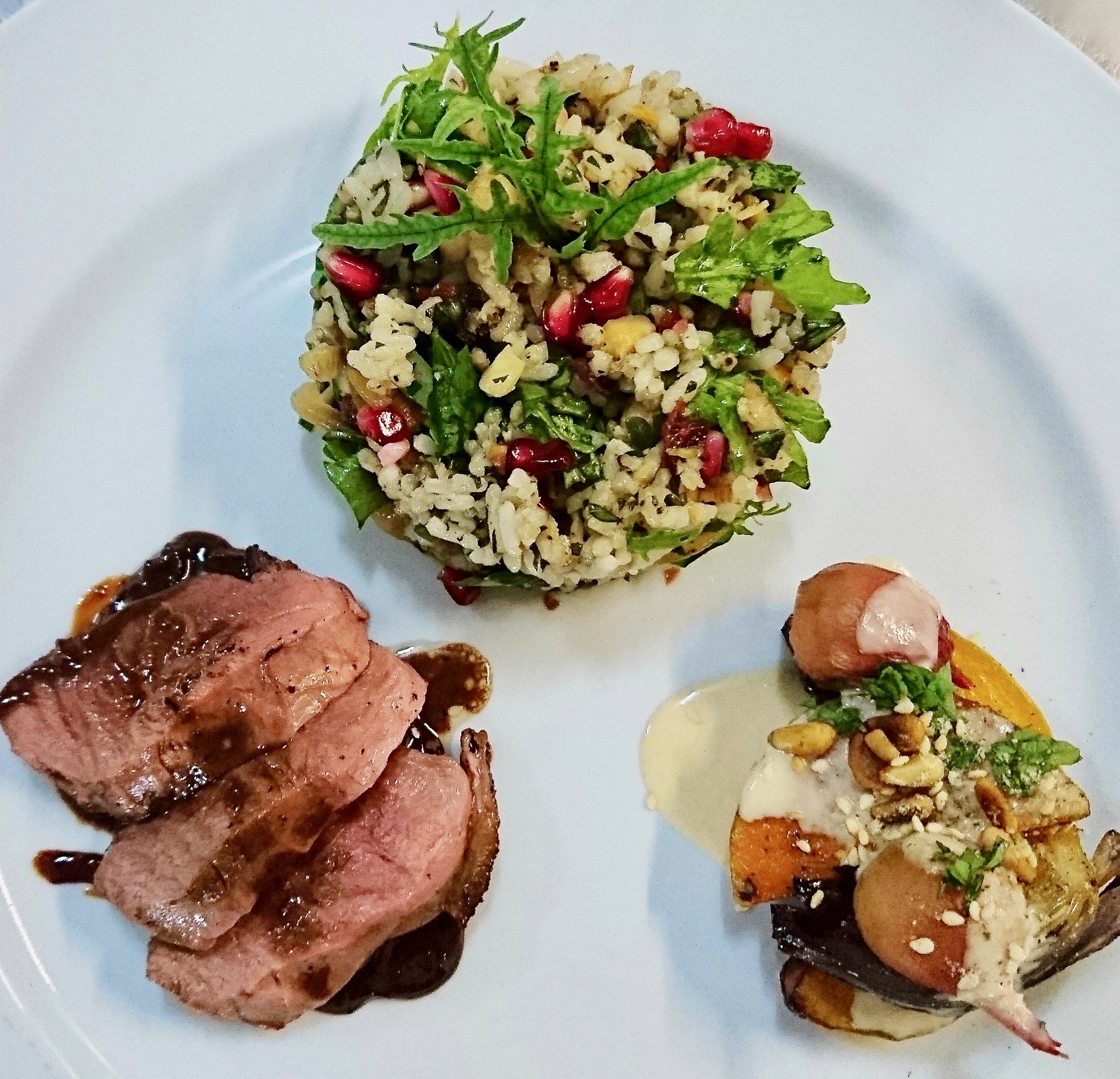
This recipe for seared duck breast has a sauce using wild sourplums, or mungomba, as the Tonga people call them. The fruit tastes like pucker maraschino cherries infused with almond essence. In the USA Zambezi sourplums (also called Gojeh Sabz or Persian Sour Plums) can be found, fresh or dried, from specialty food markets.
This recipe uses wild sourplum syrup. Its flavor especially complements savory dishes, in particular meats such as venison, duck and pork. When considering side dishes, I most often serve this with jeweled Mongu rice – an indigenous rice grown in Zambia’s Western Province – mixed with nzembwe (finger millet grown in nearby villages), caramelized onions, pomegranate seeds and peppery leaves.
Adapted from Yotam Ottolenghi
Ingredients
For the wild sourplum syrup:
- •Sourplums
- •Granulated sugar (use the same volume as the sourplums)
For the seared duck breast:
- •4 star anise, blitzed to a powder (about 1½ tablespoons, ground)
- •2 tablespoons dark brown sugar
- •1 teaspoon salt
- •Freshly-ground black pepper, to taste
- •4 duck breasts, skin scored on the diagonal crisscrossed, being careful not to cut into the flesh
- •1 tablespoon coconut oil
- •2 red onions, halved and thinly sliced
- •30 g (2-inch piece) fresh ginger, peeled and finely grated
- •240 ml (1 cup) wild sourplum syrup
- •2 tablespoons balsamic vinegar
- •1½ tablespoons Dijon mustard


Preparation
For the wild sourplum syrup: Cup-for-cup measure, use equal parts sourplums and granulated sugar.*
Rinse the sourplums well in cold water and drain. Mix the fruit and the sugar together in a heavy-based saucepan, cover with water and bring to the boil. Turn down the heat and simmer until the fruit has softened and browned, and the juice has thickened to a syrup, about 2 hours. Remove from the heat, strain the fruit out of the syrup, cool, and set aside, or preserve, until ready for use.
For the seared duck breast: In a small bowl, mix half of the ground star anise with 1 tablespoon of the dark brown sugar, 1/2 teaspoon of the salt, and black pepper to taste. Rub all over the duck breasts and refrigerate for at least 1 hour.
Heat the coconut oil in a medium frying pan over medium-high heat. Add the onions and cook, stirring, until browned and soft, 10 to 12 minutes. Add the ginger, the remaining ground star anise, the sourplum syrup, and the remaining 1/2 teaspoon salt. Stir for 1 minute, then add the balsamic vinegar, Dijon mustard, and the remaining 1 tablespoon dark brown sugar. Reduce the heat to medium-low and cook until the sauce thickens, about 10 minutes. Cover and set aside.
Heat the oven to 220°C (425°F). Set a large ovenproof frying pan over medium-high heat. Lay the duck breasts skin-side down in the dry pan and sear until the skin is deeply browned and crisp, 5 to 6 minutes. If the pan fills with fat, carefully pour off some (save it for roasting potatoes, if you like). Turn the duck and sear the flesh side for 1 minute.
Transfer the pan to the oven and roast for about 5 minutes for medium-rare, or a few minutes longer if you prefer it more done. Rest the duck for 5 minutes, then slice each breast crosswise. Gently rewarm the sauce. Stir in any juices released from the sliced duck to loosen it slightly. Spoon sauce onto plates and serve with the sliced duck.
*Quantities will depend on how much you forage. I filled a large saucepan with fruit and rendered about a 750ml-bottle and a half of syrup.
