

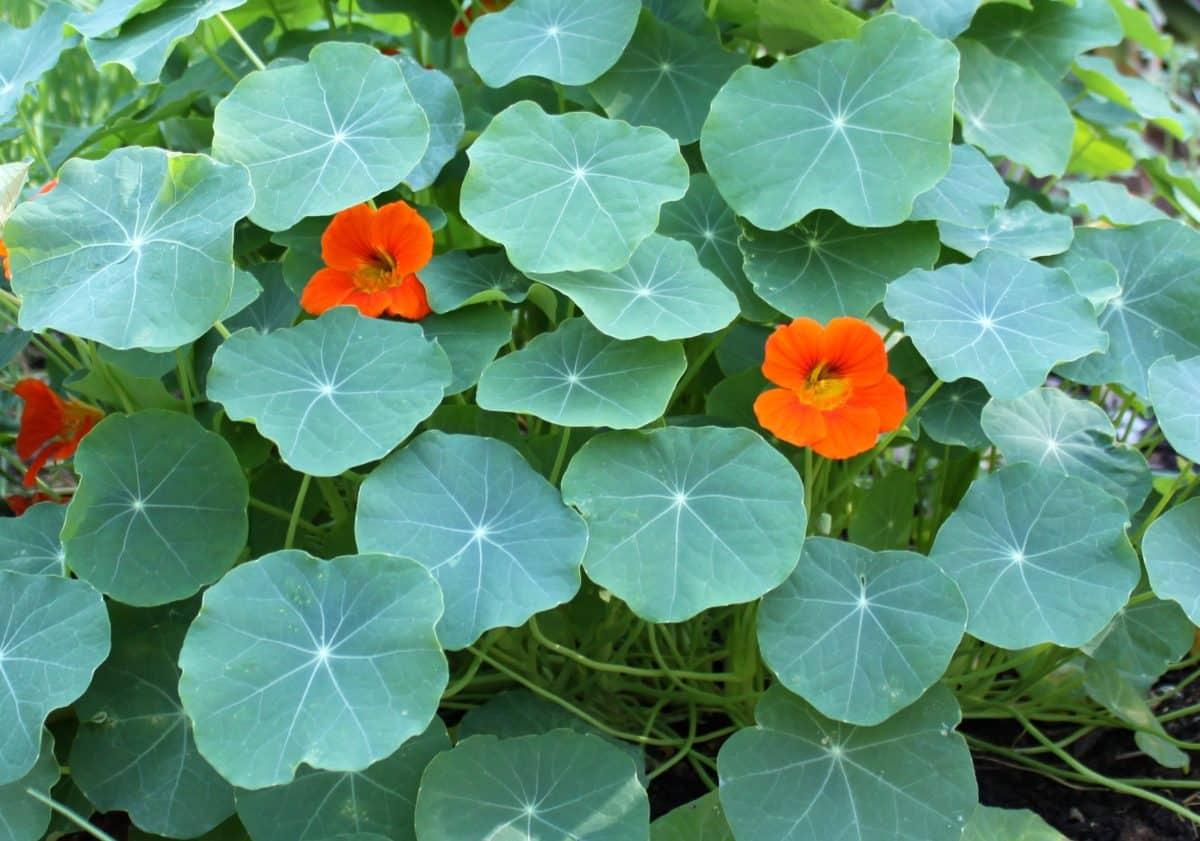
In our little part of the Zambezi Valley, a few miles upriver from Victoria Falls in Zambia, nasturtiums grow wild. That’s “wild” as in prolific, not wild as in native. And the vision of this ever-giving plant’s jeweled flowers and puddle-shaped leaves—more familiar in Monet’s Giverny than our Kalahari scrub—tucked up as happy companions among our vegetables, is a sight that is as cheerful as it is incongruous.
Nasturtiums are versatile, and here in the African bush, versatility rules. Not only an effective companion plant, nasturtiums are a flavorful and nutritious edible. Both the flowers and the leaves contain the same oils as those found in horseradish, wasabi, and mustard seeds, all of which are known for their antiviral, antibacterial, and antibiotic properties.
While our nearest grocery store is a half-hour drive away, it’s hardly a Whole Foods or Marks & Spencers. Ingredients I took for granted when I lived in the United States and Europe are seldom available. One can find almost anything in Lusaka, Zambia’s capital, a six-hour drive away, as you can in Johannesburg in South Africa, a 90-minute flight away. But here we are often lacking, making improvisation an essential ingredient for producing good food on a remote African farm. One is pushed to be creative. One is forced to make a plan.
“Let’s make a plan,” is a southern African truism I heard throughout my childhood growing up on a farm during a civil war in neighboring Zimbabwe. There were serious shortages back then, a result of economic sanctions combined with the deprivations of war. They were much worse than the shortages we experience here. Yet back then we ate well, cooking from our gardens and farms, while making up deficits from other local producers.
It’s how we mostly do it today, too, the only difference being that back in the 1970s our English influenced palates weren’t especially interested in food with foreign names or ingredients — especially if they came from anywhere near the Mediterranean. I’d never tasted an olive or an anchovy, for instance, until I enrolled in a French-inspired cookery school in England after I finished high school. As for tasting capers, they came even later. Theirs was an alien flavor which took a few tries before I developed a taste for them. Once I did I was hooked. Ever since, capers have been a staple in my pantry–until, that is, I moved to the African bush.
I was lamenting their absence to my sister-in-law, Elizabeth, who came to live in Zambia early last year, around the same time that I did. I told her how, out of desperation, I’d even tried to grow my own caper bushes but that none of the seeds had germinated. Had I tried nasturtium seedpods as a replacement? she asked. Nasturtium seedpods instead of capers? I’d never heard of them before.
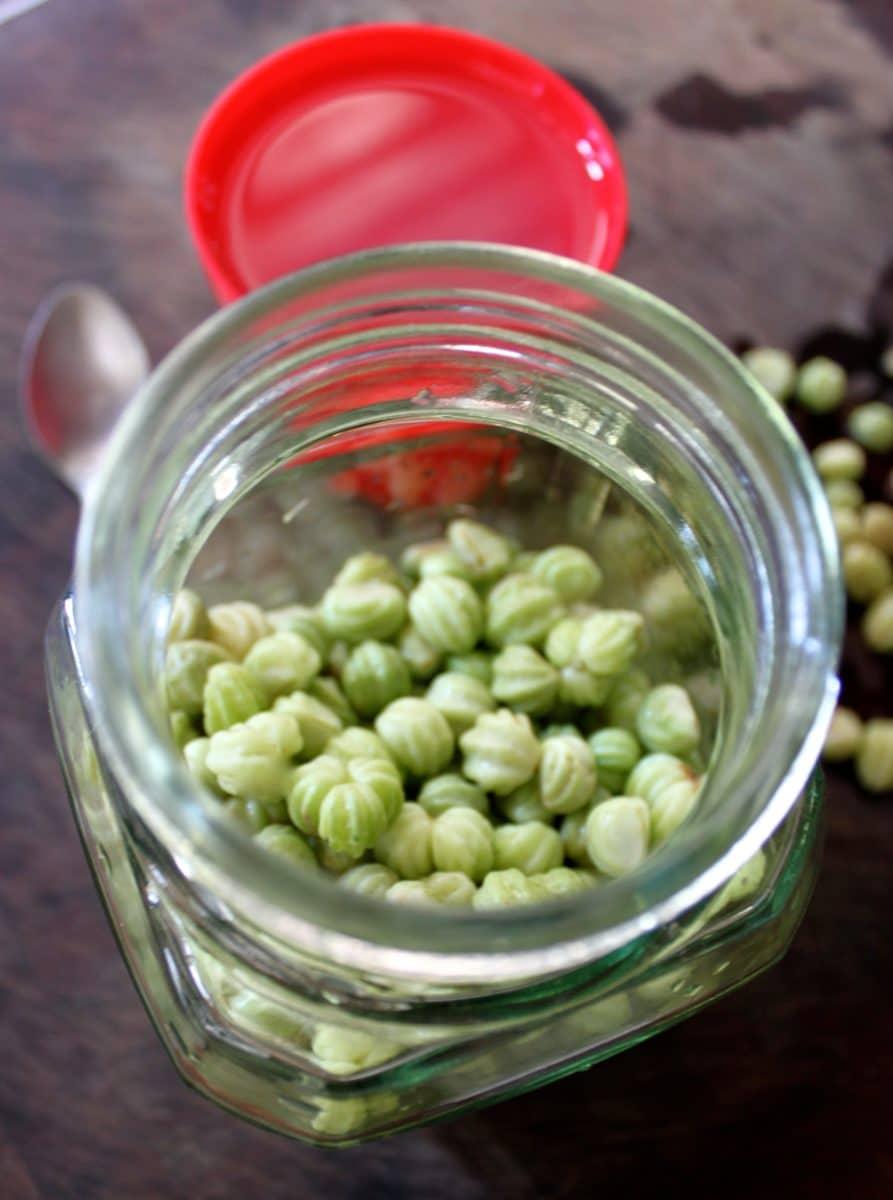
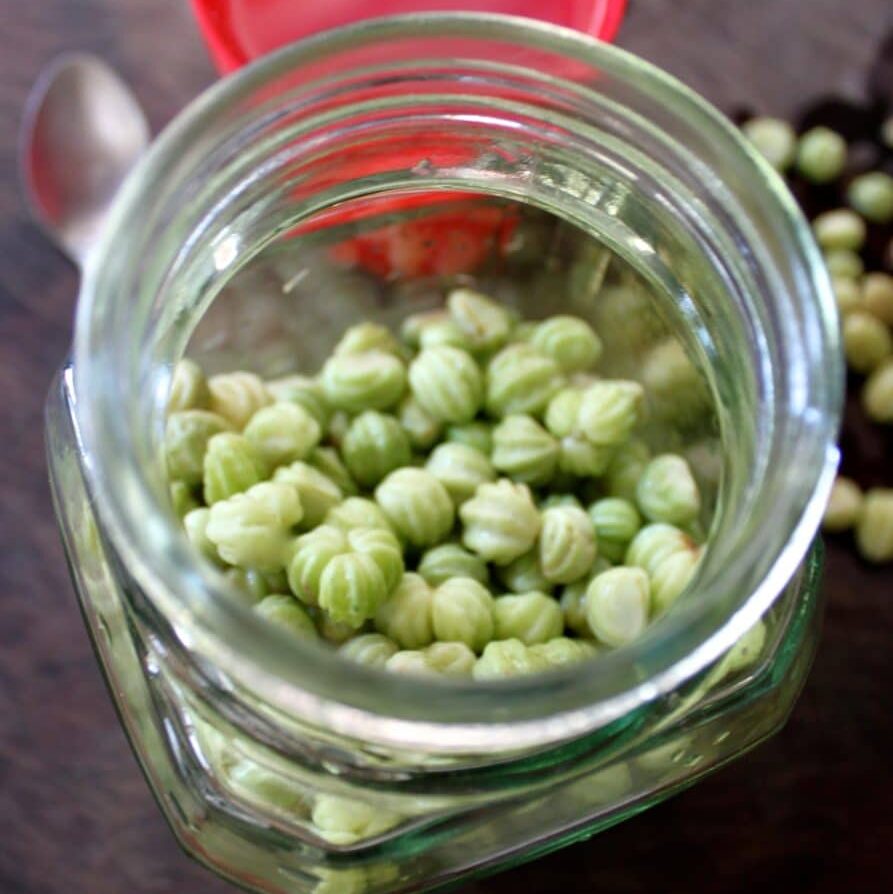
When she came to visit me shortly after our conversation, Elizabeth brought with her a large bag filled with immature nasturtium seedpods collected from her own garden: young, pale green, stripy seedpods the size of small chickpeas, which she harvested soon after the dying flowers had fallen from the plant.
Armed with her basic instructions, I set about researching how to make nasturtium capers. I learned that nasturtiums are classified as a vegetable, but that Thomas Jefferson ate pickled nasturtium seedpods grown in his gardens at Monticello. From various resources I crafted a recipe using available ingredients and a method suited to the facilities in my bush kitchen: brining the seedpods in salt water for three days, draining and washing in cold water, then marinating in a vinegar mix for a further five days.
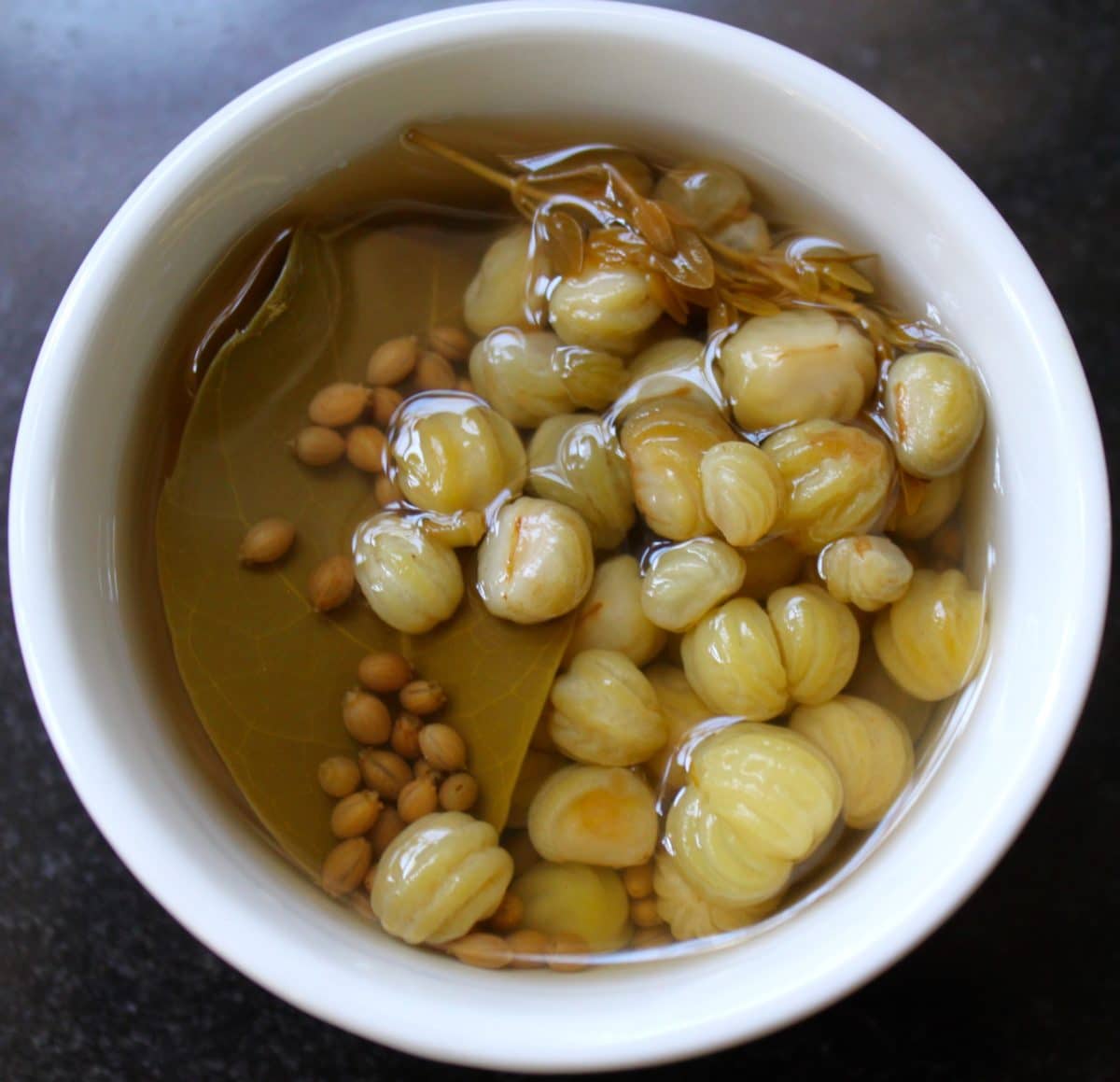
To me, pickled nasturtium seedpods—or Poor Man’s Capers, as referred to by some—proved to be a terrific substitute for regular capers. They are slightly larger and crunchier, but still piquant and peppery. I’ve eaten them as a replacement for cornichons, with cheese and cold meats. I’ve added them as a key ingredient in salsa verde and putanesca sauce. Here I share my most favorite way of using nasturtium capers: in a potato salad, inspired by a recipe in Sarah Raven’s Garden Cookbook.
Nasturtium Capers
These capers should last for six months to a year if sealed properly and kept refrigerated.
This recipe yields 473 ml (2 cups).
Ingredients
- •75 grams (¼ cup) salt
- •473 ml (2 cups/2 generous handfuls) immature nasturtium seedpods
- •177 ml (¾ cup) rice vinegar
- •177 ml (¾ cup) white wine vinegar
- •15 ml (1 tbsp) granulated sugar
- •3-4 sprigs fresh thyme
- •15 ml (1 tbsp) coriander seeds
- •2 fresh bay leaves, or 1 dried


Preparation
Place the nasturtium seedpods into a jar with a lid.
Bring the salt and 590 ml (2 1/2 cups) water to a boil in a small saucepan, and immediately pour over the seedpods.
Cover and brine for three days at room temperature, out of the sunlight.
Drain the seedpods, rinse well in cold water, and return to the jar.
Bring the vinegar, sugar, thyme, coriander seeds, and bay leaves to a boil in a small saucepan, and pour over the nasturtium buds.
Cool, seal the jar, and refrigerate for five days before using.

5 Minute Homemade Mayonnaise
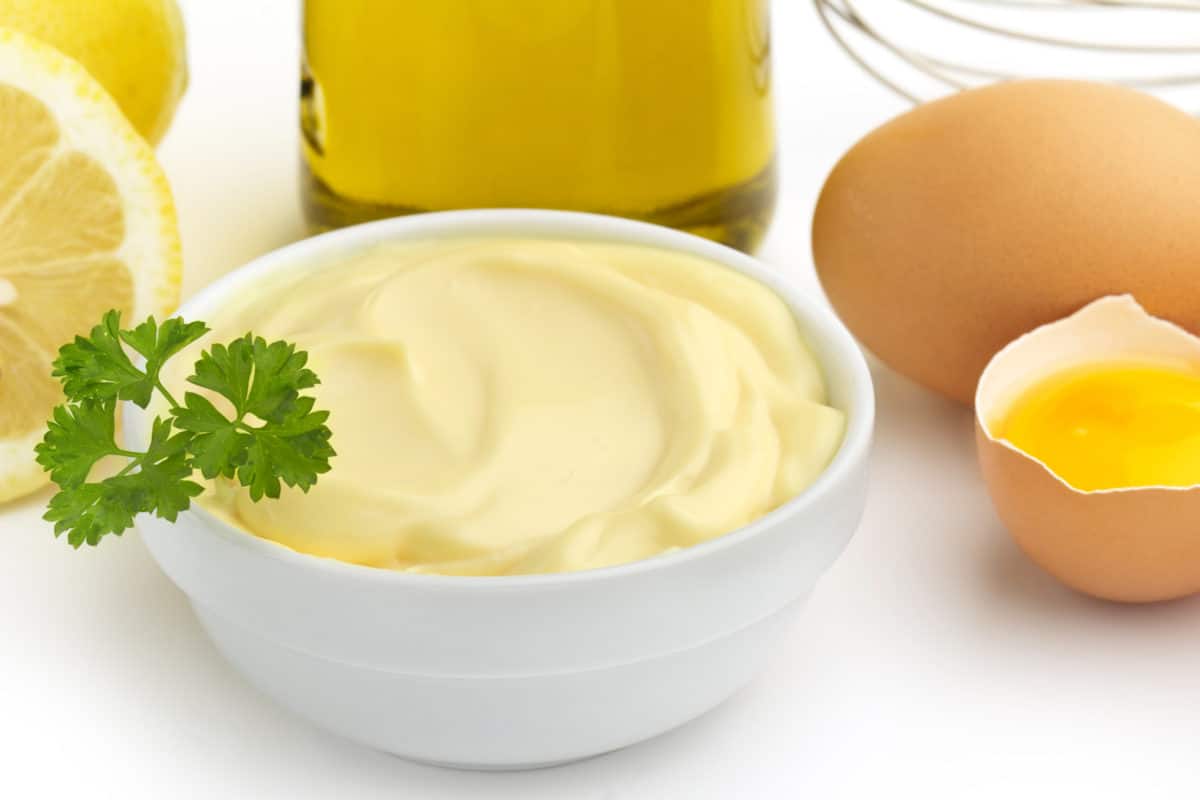
Yield: Just over a cup of mayonnaise, or more if you thin it out with yogurt, crème fraiche, or sour cream.
Note: You will need an immersion blender for this recipe.
Ingredients
- •1 egg
- •237 ml (1 cup) light oil, like sunflower or grape seed
- •1 tablespoon olive oil
- •Juice of ½ a lemon
- •½ teaspoon Colman’s hot English mustard or 1 teaspoon Dijon mustard
- •Salt & pepper to taste
Preparation
Break the egg into a mixing bowl*
Gently pour the oil over the egg, giving it time to rise to the surface.
Place your immersion blender directly over the egg yolk and start blending, slowly lifting up the stick from time to time to incorporate more and more of the oil. The end result will be a thick mayonnaise.
Mix in the lemon juice, mustard, and salt and pepper with a small spoon until well incorporated.
Here I have provided the method for making basic mayonnaise, but feel free to experiment. You can enhance it any way you wish: incorporating chopped fresh herbs, flavored vinegars, different types of mustard, or spices like paprika, turmeric and saffron. You can also thin it out with plain yogurt, creme fraiche or sour cream.
*Editor’s update: We’ve found that the easiest method for making mayonnaise is to put all ingredients into a glass jar with a large enough opening for the immersion blender and run the blender touching the bottom of jar without moving it about. Lift straight up occasionally after it begins to emulsify to check the consistency.
New Potato Salad with Fresh Herbs and Nasturtium Capers

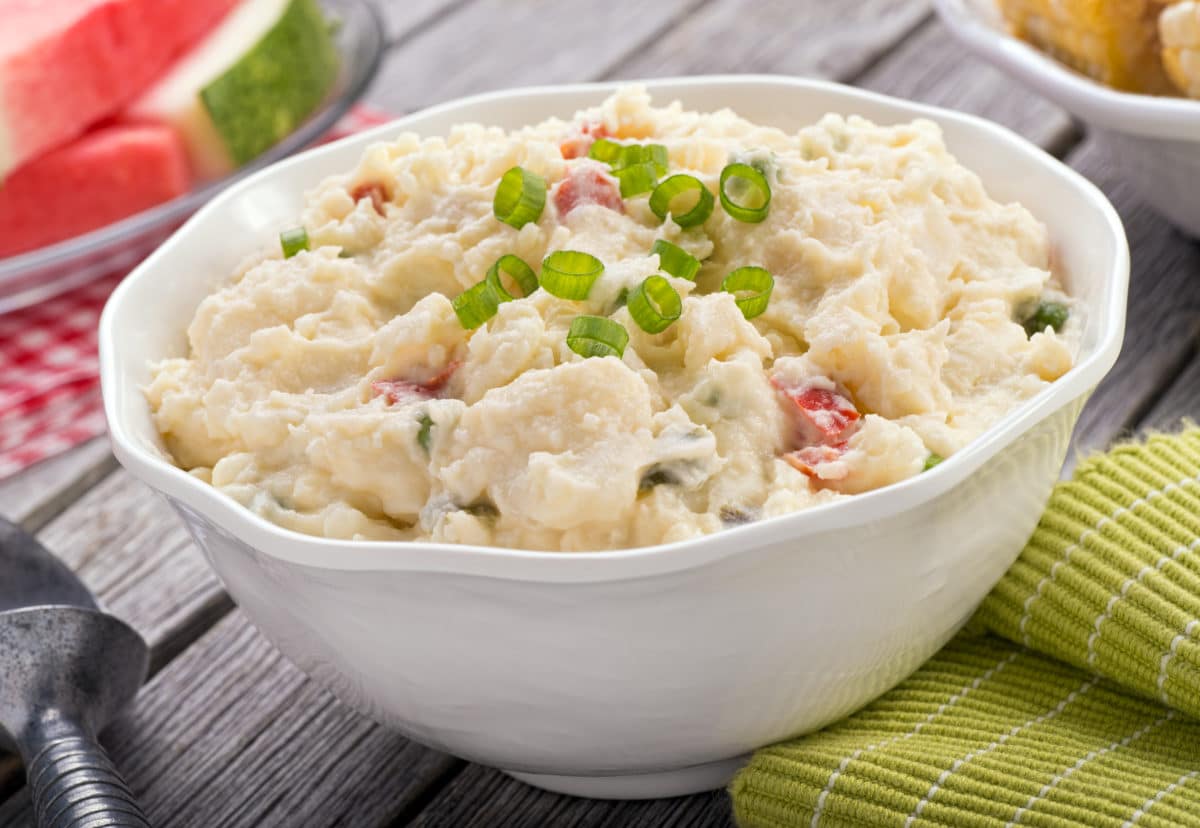
You will need Five-Minute Homemade Mayonaisse for this recipe.
Ingredients
For the salad
- •550 grams (1¼ pounds) new potatoes, halved or quartered depending on their size
- •100 grams (1 cup) spring onions, finely sliced (save the green ends for garnish)
- •2 tablespoons nasturtium capers, roughly chopped
- •1 tin (55g/2oz) anchovies, roughly chopped
- •1 heaped cup fresh herbs, roughly chopped. I used mint, dill, basil, parsley, chives and thyme
- •Optional: Nasturtium/chive flowers for garnish
For the dressing
- •Five-Minute Homemade Mayonnaise*
- •125 grams (½ cup) plain yogurt
- •Salt & pepper to taste
Preparation
Cook the potatoes in salted boiling water, about 10-12 minutes. Watch them carefully: they should be cooked but not breaking apart. Drain in a colander and then run under cold water to cool.
Make the Five-Minute Homemade Mayonnaise, mixing in the yogurt, and salt and pepper to taste.
Gently combine the mayonnaise with the fresh herbs, reserving a tablespoon of herbs for garnish.
Combine the potatoes with the capers and anchovies, and then mix in the herb mayonnaise.
Garnish with remaining fresh herbs and green ends of the spring onions.