

The names of old British recipes were often whimsical and appealed to the imagination. They evoke history as well. According to folklore, on the day the unfortunate King Richard III lost the Battle of Bosworth (and in the process, his life), his cook had misplaced the recipe for his favorite biscuits. When the recipe was later recovered, it was tagged with the name Bosworth's Jumbles.
Legend also tells the origin of the 18th century nursery rhyme about Little Jack Horner, in which the Abbot of Glastonbury sent King Henry VIII a gift of a huge Christmas pie with deeds to valuable properties concealed inside, intended as a bribe. The story goes that Thomas Horner was entrusted to deliver the pie, but stuck in his thumb to taste it, discovered the deeds, and stole one for himself².
Food and history are intertwined. Recipes sometimes poignantly reflect the times of their invention and the means of the people who prepared them. What child hasn't enjoyed the tale of Stone Soup, in which a poor traveler has to rely on his wits to coax villagers to contribute ingredients to the soup made with a "magical" stone? In fact, ancient recipes consisting primarily of water, bread, and scanty additions of garlic, onions, cabbage, and beans are still in use today.
For many children, the Middle Ages represent a time of high excitement. Kingdoms with armored knights, plumed horses, lords and ladies, thatched cottages, peasants, and primeval forests all provoke the imagination. Children want very much to know what life was like then. How did people make cloth, how did they dress, how did shepherds live, what games were played? What did they eat?
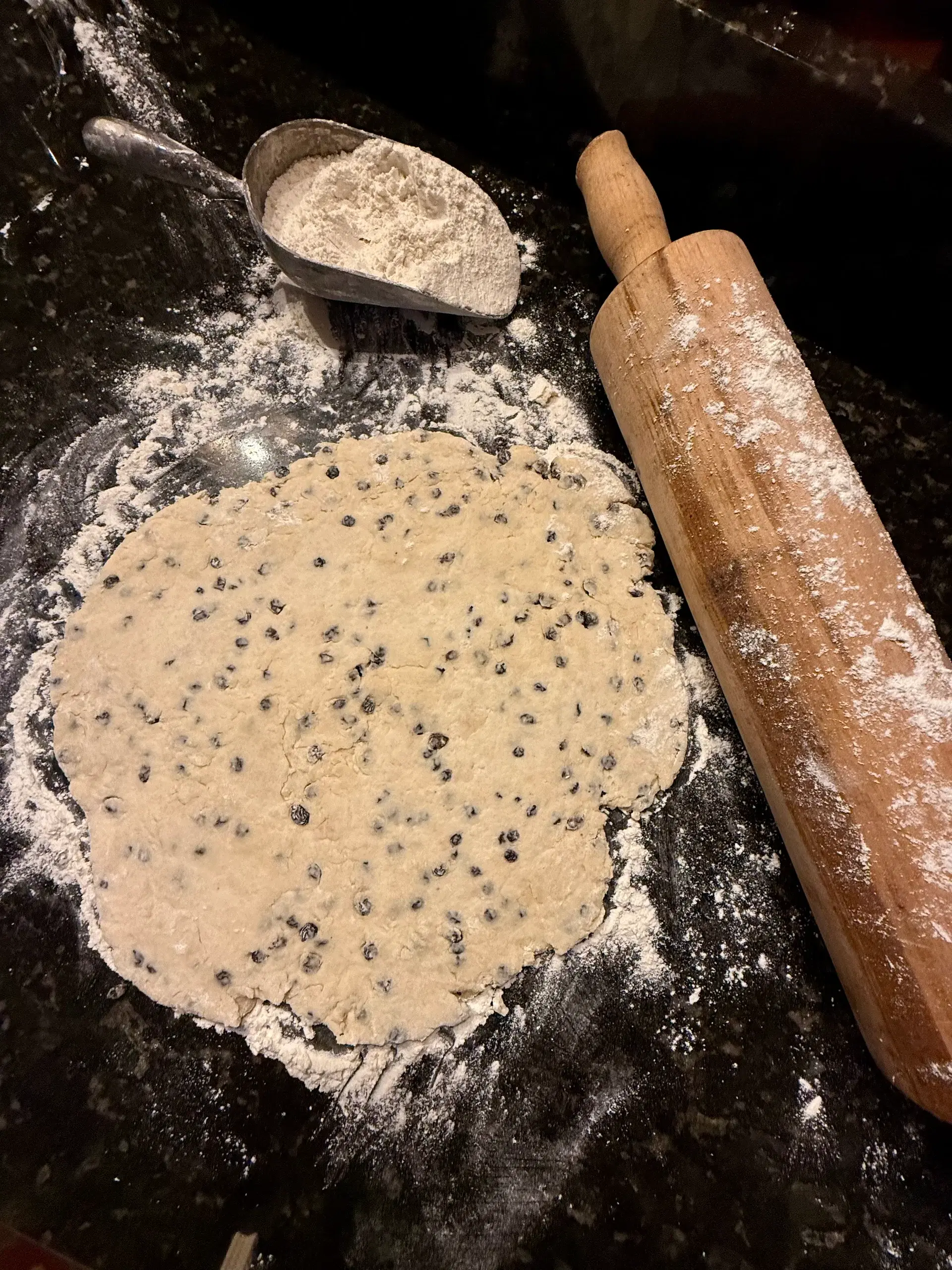
An effective way to teach children about unfamiliar foods is to let them participate in the making of them. Let them see each ingredient individually - flour, butter, milk - and taste ingredients like dried fruit. In this way the unfamiliar becomes recognizable and understandable, and the excitement of making something becomes the pleasure of creating and sharing.
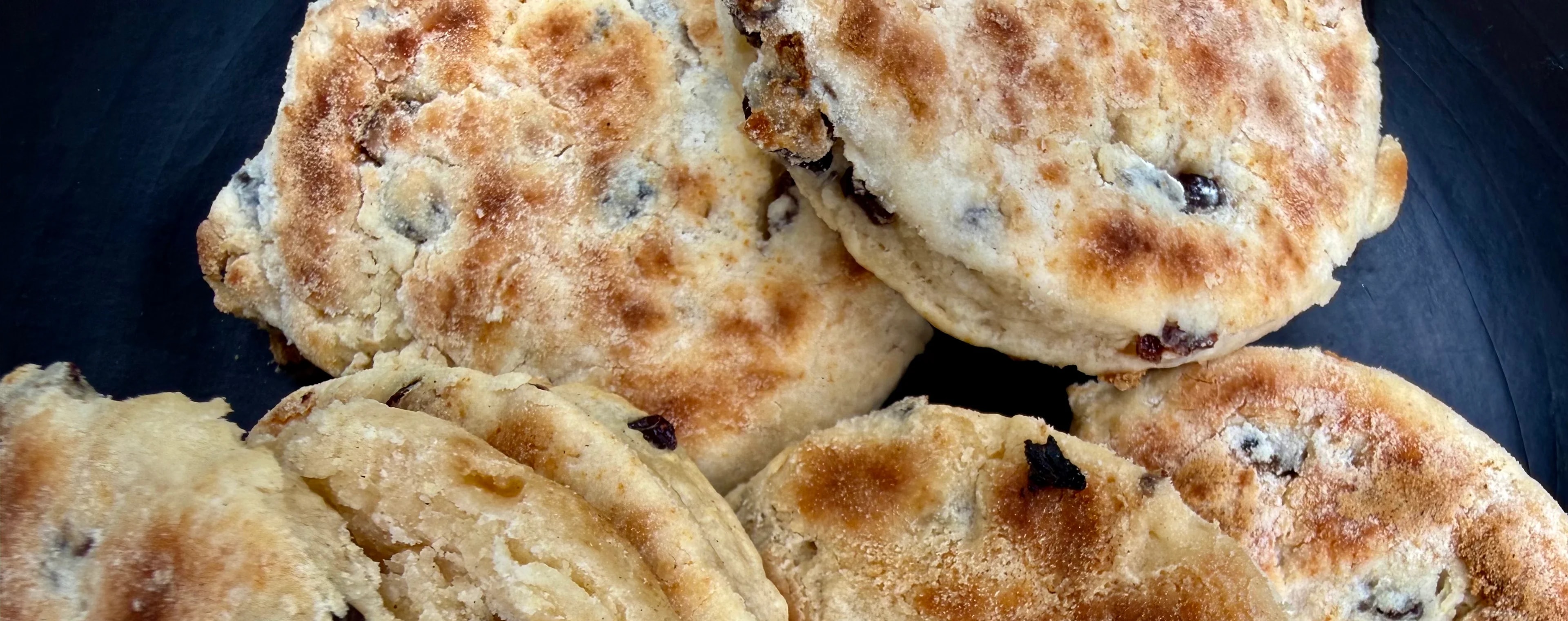
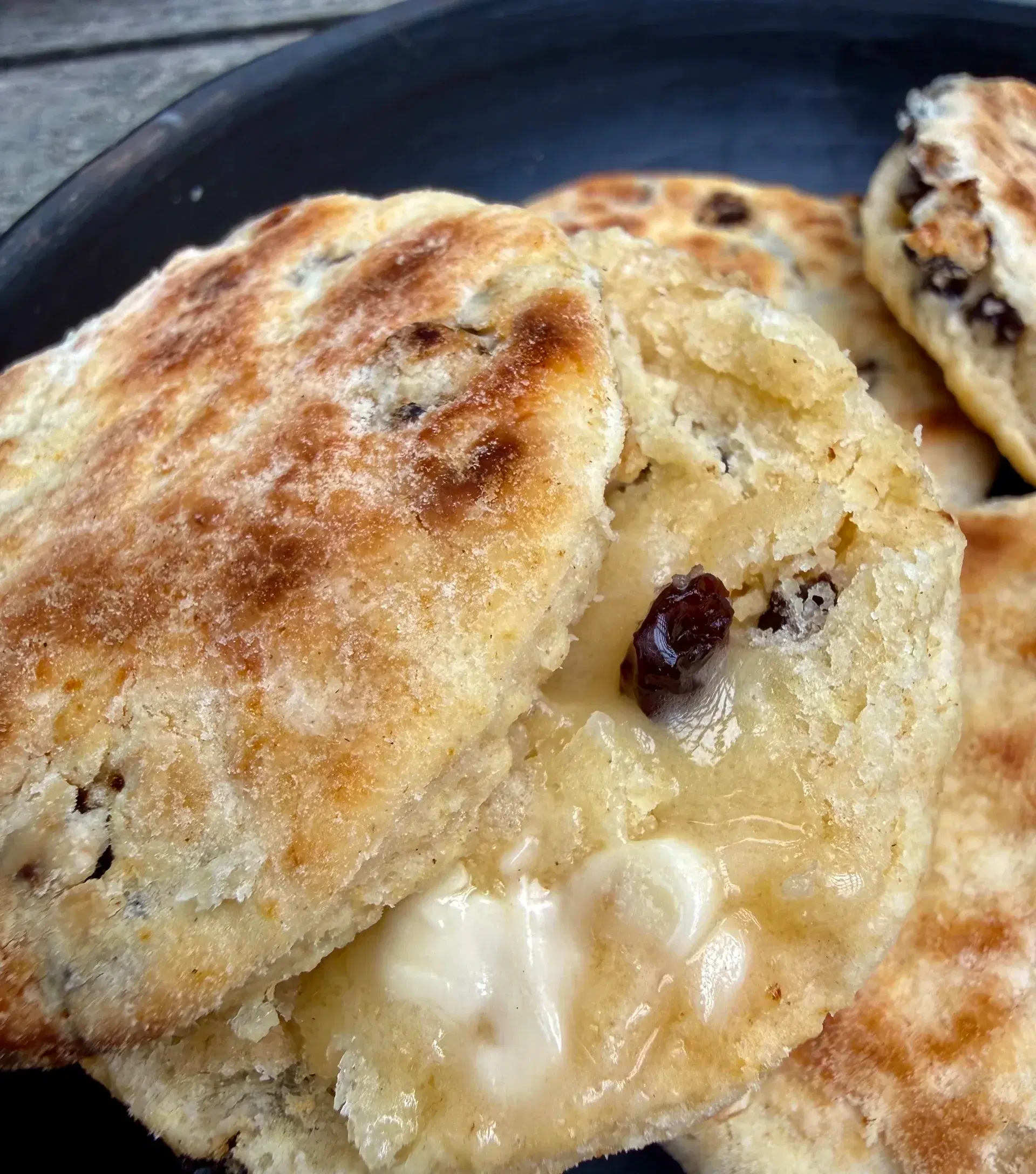
A fun introduction to old British food is a recipe called Singing Hinnies. Hinnies are flat griddle cakes that sizzle and "sing" as they cook. They can be made by children of almost any age, as the mixture of flour and shortening needs to be crumbled with clean hands, then mixed with milk, patted into a dough, and rolled and cut. Once browned on a griddle or skillet, they are lovely split open and filled with butter, jam, or any soft spreadable filling. This is a nice recipe for a small class, because it is easily multiplied, and each child can each bring a few cakes home to share with family. If any children have celiac issues, be sure to use a gluten-free flour for the entire class to avoid cross-contact with gluten.
¹ Source: https://www.cfpublic.org/2006-01-08/reason-behind-the-rhyme-little-jack-horner
Singing Hinnies


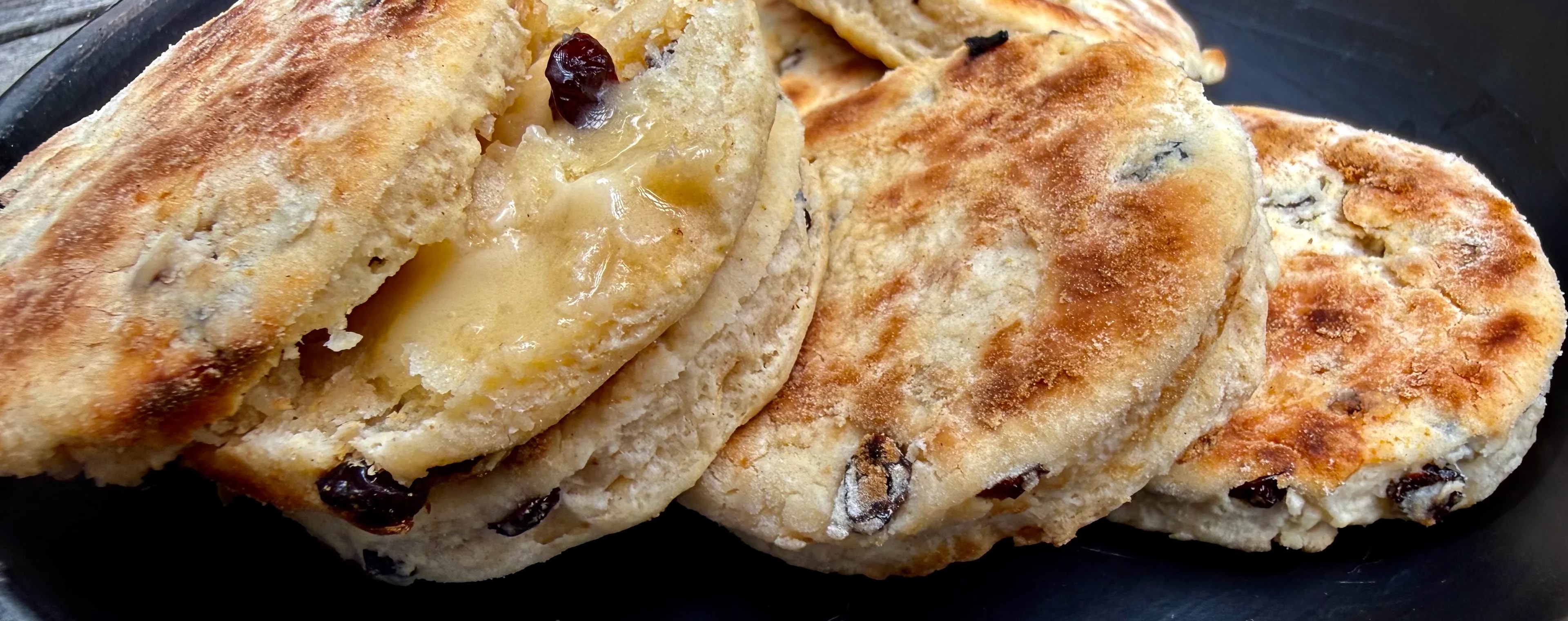
This recipe comes from Northumberland, England. The word hinnie comes from the way the endearment honey was pronounced in Northern England. They are not sweet and make a nice hand-held breakfast, especially if sliced crosswise and slathered with butter and jam.
The "singing" part of the name comes from the way these little cakes sizzle as they are cooking. The original recipe included lard (animal fat). Our version uses vegetable shortening, which is a healthier substitute.
Cook the hinnies on a griddle or in a big frying pan. This recipe makes about 18 singing hinnies. If you sing while you are making them, then there will be 19!
Ingredients
- •2 1/2 cups flour
- •2 tsp baking powder
- •1/4 tsp salt
- •4 Tbsp butter
- •4 Tbsp vegetable shortening
- •3/4 cup dried currants
- •about 1/3 cup milk
- •oil
- •butter


Preparation
Sift the flour, baking powder, and salt into a bowl. Rub the butter and shortening between your fingers in the dry ingredients until the mixture looks like coarse breadcrumbs. Stir in the currants and just enough milk to make a firm dough.
Roll out the dough on a well-floured surface* to about 1/4 inch thick. Use a round cookie cutter to cut into circles about 2-1/2 inches in diameter.
Oil the griddle or pan, heat it, and cook the hinnies until they are brown on both sides, about 6 minutes a side. Slice them in half and put a little butter in them. Cover them with a clean kitchen towel to keep them warm until all the hinnies are cooked.