
Years ago, before I was a forager, I visited Crete with my parents in early spring. As we approached the entrance to the Samaria Gorge we saw that the fields were full of people picking something. My father pulled over and made me get out to ask what they were harvesting. Being a dutiful daughter, I asked the first person I met. He slapped his generous belly enthusiastically with both hands and answered, “Greens! For the health!” Later that afternoon, I’m sure we were served some of those same greens: tender young dandelion leaves, briefly blanched, then sautéed in olive oil and served at room temperature with a squeeze of lemon juice.
We’ve all heard about the health benefits of the Mediterranean diet, but foraged greens and other wild edibles are an integral part of that diet not just because they’re abundant, free, and healthy. They’re also undeniably delicious. On Crete you’re as likely to find wild greens pie (hortopita) as you are spinach pie (spanikopita) on the menu. Foraging for wild edibles is part of everyday life, as common as buying fresh vegetables at the open air market. In fact, you’ll often find wild edibles for sale at those markets.
Wherever you are, spring greens offer a tonic, a rush of vitamins and minerals, and the fresh flavors you’ve been craving for months. Many can be used interchangeably in recipes like stir fries, quiches, stews, and soups, but since some greens are mild and others quite bitter, it’s a good idea to get to know the major players in your area. Bitter greens are usually served cooked, but can also be used raw in salads, balanced with milder, foraged greens. Here’s a quick intro to some of the most common (and most delicious) early spring greens.
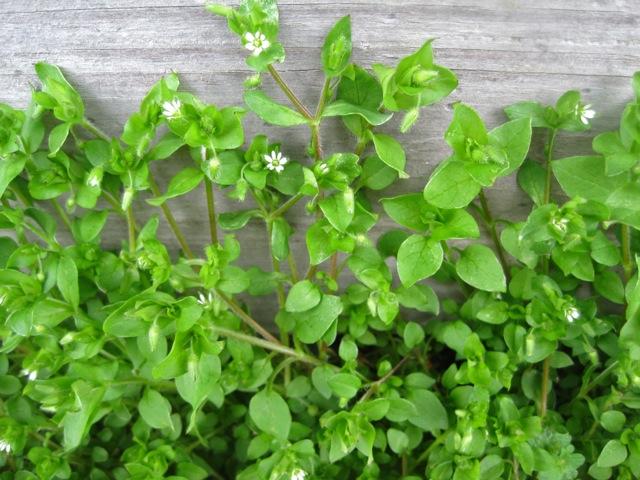
Chickweed is a mild, cool weather green. It grows in both shade (where its leaves will be larger and the plant may be 8” tall) and sun (where its leaves will be smaller and the plant will hug the ground). Chickweed struggles in the heat of summer; although in cool, shady spots you may find it throughout the season. Use scissors to shear off the top two or three inches of chickweed and make it the featured, mild green in a foraged salad. Or, use it to balance the flavor of bitter greens in a cooked dish.
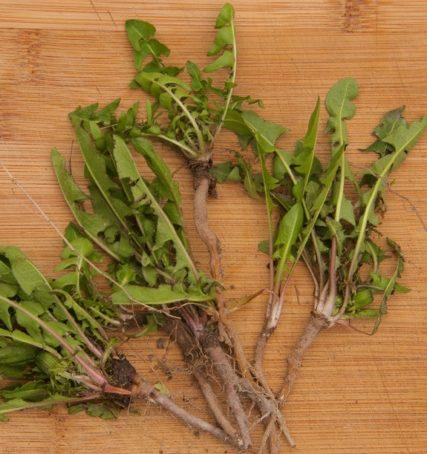
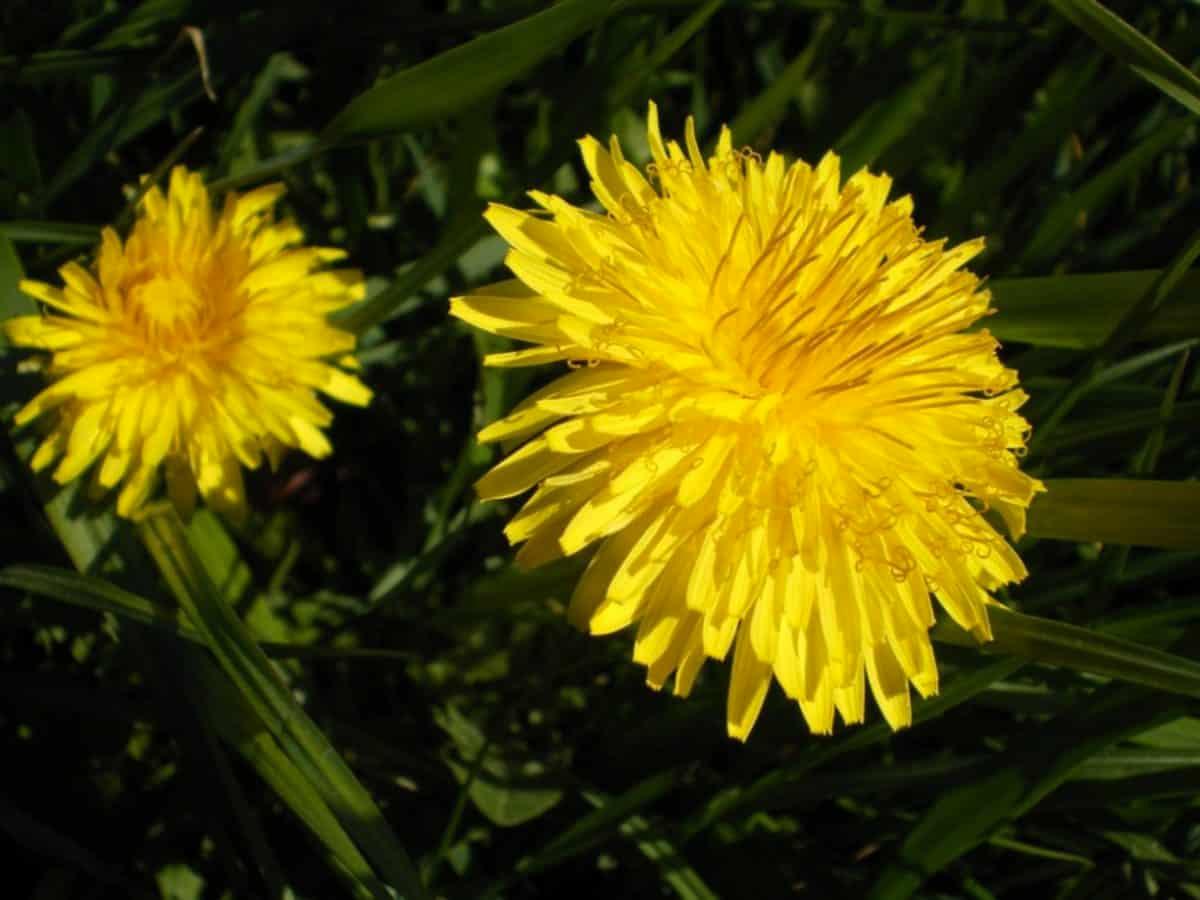
Dandelions are one of the most common weeds around, despised by many and appreciated by few. But have you checked your local grocery store lately? Cultivated dandelions are on sale right next to all the other greens. Dandelion greens are best harvested in cool weather, tasting less bitter before they flower. You can pick individual leaves, or dig up the entire plant, if you’re weeding your lawn and making dinner at the same time. Young dandelion greens are tasty raw in salads, or you can blanch them briefly in boiling water, then sauté in olive oil and serve with lemon or vinegar.
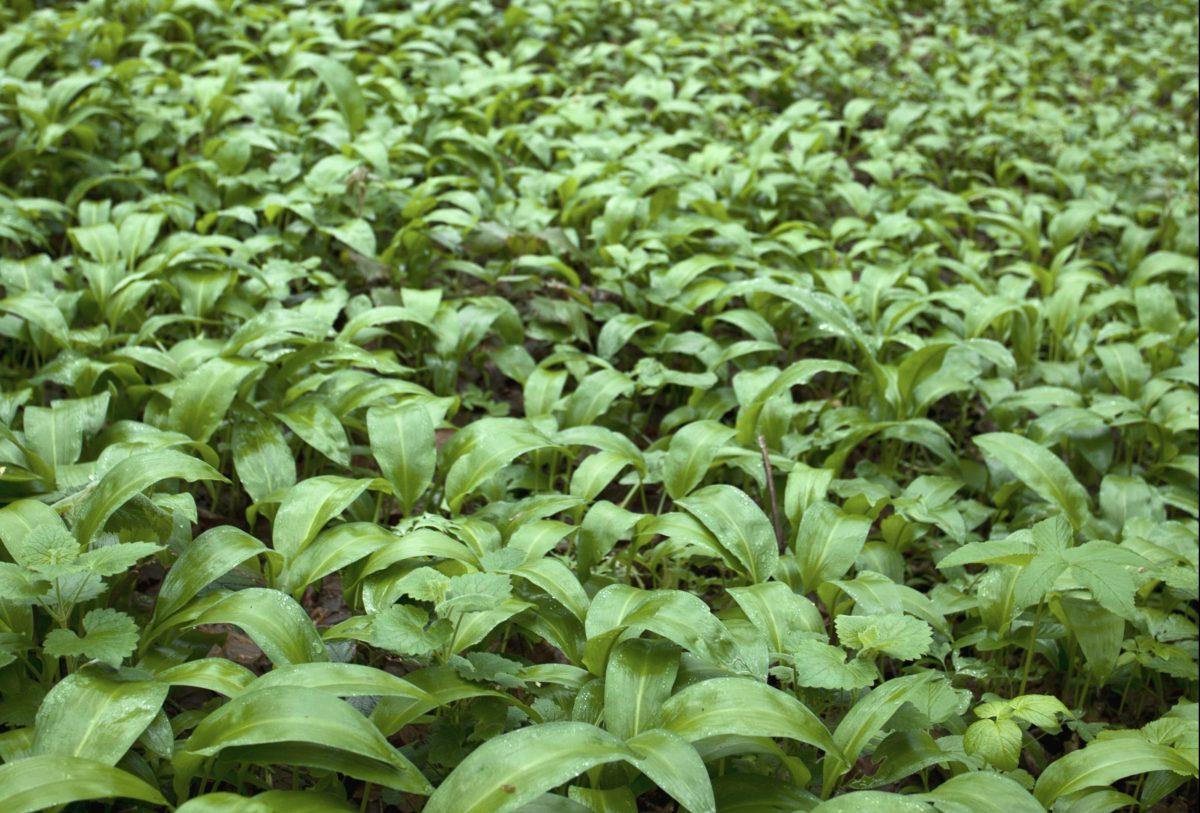
Garlic mustard is a rampant weed and an invasive pest in many ecosystems, and native plant societies often conduct spring outings devoted solely to the purpose of pulling up as much of the plant as possible. (I wonder how many of them eat their harvest.) Garlic mustard is allelopathic, which means its roots produce a chemical that hinders growth of nearby vegetation, giving garlic mustard a definite advantage. This is a biennial plant, producing a rosette of foliage in its first year and a flowering stem the second. First year foliage has a strong, but pleasant, garlicky flavor. It’s delicious raw in salads or sandwiches and makes a fantastic pesto, requiring no additional garlic. Cooked, it’s an excellent stuffing for pasta and equally tasty in omelettes, quiches, and frittatas.
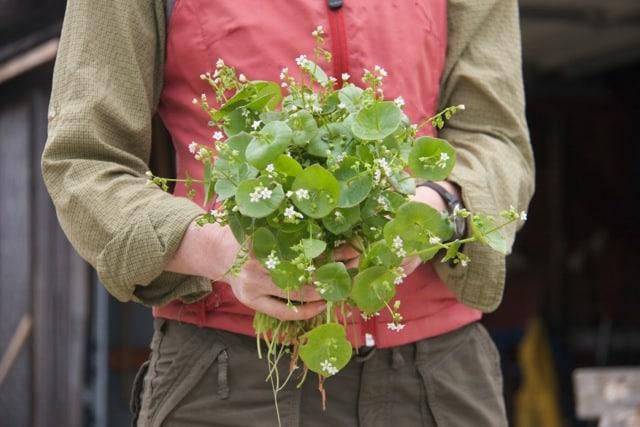
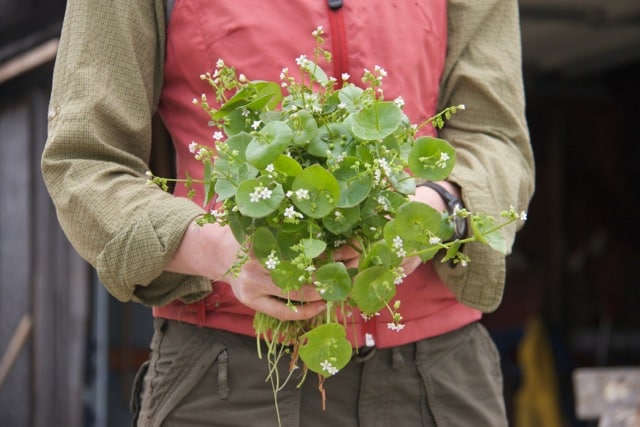
Miner’s lettuce is my absolute favorite raw salad green: succulent, crunchy, and mild. I could eat a bowl of it with just a little vinaigrette and consider myself well fed. Miner’s lettuce got its name during the California gold rush when fresh vegetables were hard to find. It’s got loads of vitamin C and helped keep scurvy at bay. Unfortunately, it’s only found wild on the West Coast, but you can order seeds and start your own crop anywhere you have moist soil and some shade. It self-seeds freely, so you may only need to plant it once.
Several species of sow thistle are common weeds that fall into the bitter greens category. Some are prickly, some are not, and all have yellow flowers similar to those of dandelions, with which they are often confused. Young leaves have a slightly bitter flavor and are tasty raw in salads. They also make a great addition to Vietnamese spring rolls. Middle-aged leaves are an excellent cooked green, but try a bite raw first to test for tenderness. Fully mature leaves can be too fibrous to bother with. The spiny sow thistle develops its spines with age. Baby leaves have none, and young spines are easily softened by cooking. Older leaves, with tough spines, aren’t worth the trouble of harvesting.
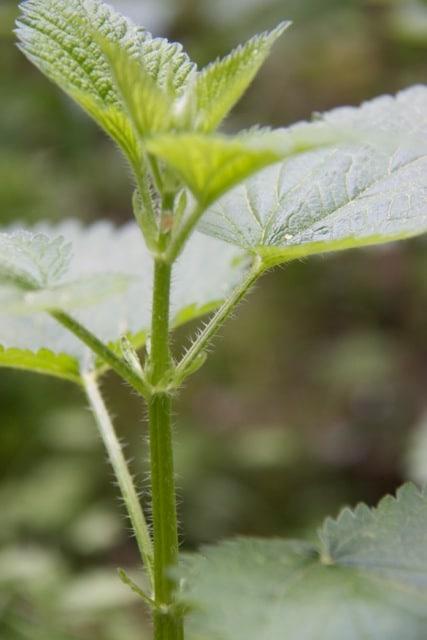
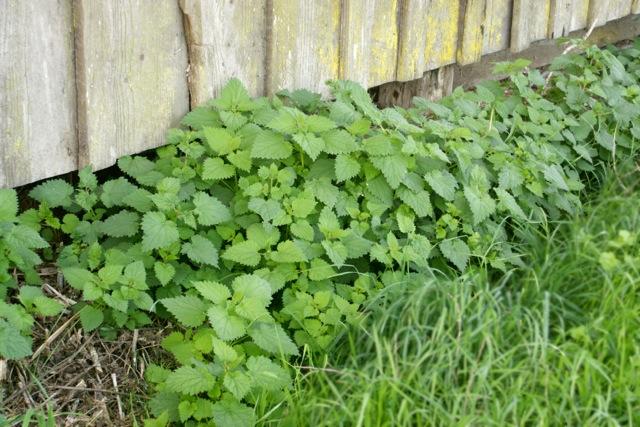
Yes, they sting, but stinging nettle is totally worth the pain. The stems and undersides of stinging nettle leaves are covered with tiny, hollow hairs (trichomes) that contain several chemicals including histamine and formic acid. Use leather gloves to pick the top several pairs of leaves and stem, and harvest before the plant blooms. The stingers are destroyed by cooking, so a quick blanch will disarm your harvest. Boil the nettles for 2-3 minutes, then drain them, rinse in cold water (to stop the cooking), then drain them again. Nettles are highly nutritious and can be used any way you’d use spinach: quiches, frittatas, pasta, or gnocchi. It’s a mild spring green, but because of the stingers, you’ll always want to eat it cooked, never raw.
Once you’ve gathered your early spring greens, why not try making a classic hortopita? All the greens described above cook down just like spinach, so you’ll need to harvest more than you might expect. Mix the greens to create a balance of mild and bitter that pleases your palate.
Author’s Note: Remember, never eat anything you haven’t positively identified. If you’re interested in foraging, take a class and buy a few books that focus on wild edibles in your area. There are also helpful websites (such as Foraging Food) and many Facebook groups for online research. Accurate plant identification is essential for safe and delicious foraging.
Hortopita
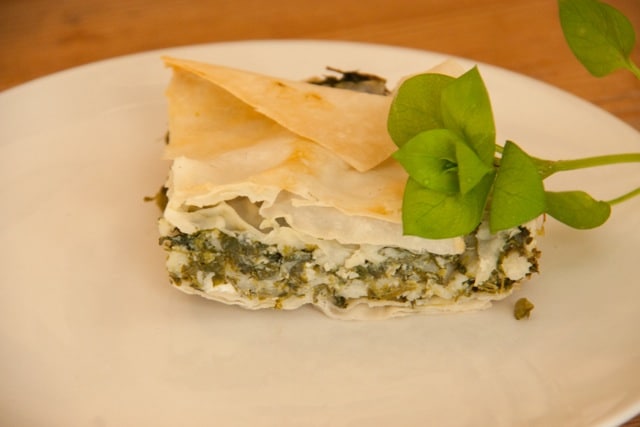
Ingredients
- •Olive oil
- •1 leek, chopped
- •100 grams (1 cup) chopped scallions, finely chopped
- •113 grams (4 cups) wild greens, roughly chopped
- •1 tablespoon fresh dill, minced
- •150 grams (1 cup) crumbled feta cheese
- •225 grams (1 cup) cottage cheese (or ricotta or Greek yogurt)
- •2 eggs, slightly beaten
- •Salt and pepper to taste
- •1 box of phyllo dough (country style is slightly thicker and recommended for this dish, but if you can’t find it, regular phyllo is fine)


Preparation
Preheat oven to 177o C/350o F. Heat a few tablespoons of oil in a large pan and cook the leek and scallions until they are tender. Add the greens and cook to reduce, then remove from the heat and let them cool.
Once the greens are at room temperature, add the dill, feta, cottage cheese, and eggs, and combine thoroughly. Add salt and pepper to taste and set aside.
When working with phyllo dough it’s important to keep it from getting dry and brittle. Thoroughly wet a dish towel and wring it out. Use this to cover the phyllo as you work with it and you’ll prevent the dough from cracking into pieces. Spread your phyllo out on the counter and cut it to fit a 28 cm x 18 cm (11” x 7”) pan. Brush the bottom of the pan with olive oil and lay down a piece of phyllo. Brush the phyllo with olive oil and lay another piece on top of the first. If you’re using country style phyllo, you’ll use two sheets per layer. If you’re using thinner phyllo, you’ll need four sheets per layer.
Take half of the greens mixture and spread it evenly across the phyllo. Place a layer of phyllo on top and brush it with olive oil. (This is a delicate operation if you’re using the thinner phyllo.) Add one or three more layers of phyllo, depending on the thickness of your dough, oiling each layer. Spread the remainder of the greens on top of the phyllo and again, add two or four layers of dough, brushing each layer with oil.
Using a very sharp knife, score the top layer (or two) of the phyllo into rectangles. If you wait until after you’ve cooked the pita, the pastry may crack when cut. Scoring the raw phyllo makes for neater cutting later on.
Bake for 45 minutes or until the top layer of phyllo is golden brown and crispy. Remove from the oven and let it cool slightly, then cut and serve.