
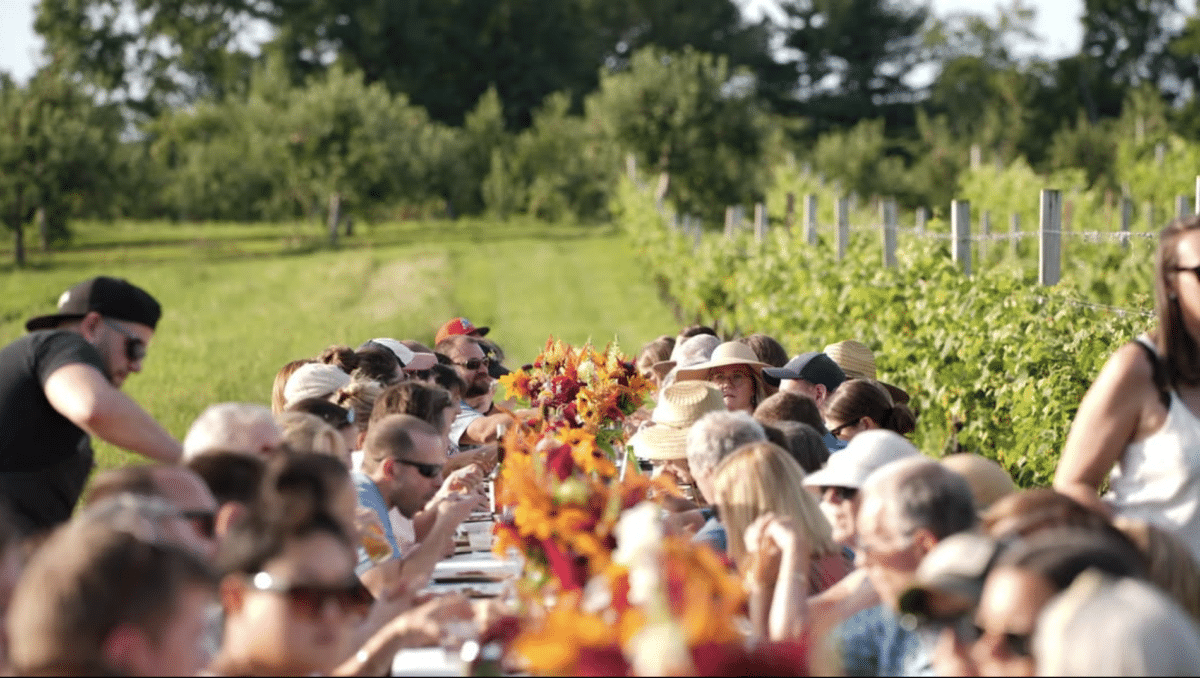
“Imagine a dinner in a stunning field where the food is grown just feet away. Imagine chefs, farmers and you coming together to support local agriculture and share stories. This is The Farmers Dinner.”
In a follow-up to our earlier discussion with Chef Keith Sarasin—where we talked with Keith about the profound interplay of food, grief, and love—we return to explore another dimension of his culinary philosophy. Chef Sarasin, a vibrant presence in the food community, is the innovative force behind Aatma, an Indian pop-up restaurant in New Hampshire, and is founder of The Farmer’s Dinner. Celebrated as a YouTube star and the author of five cookbooks, his previous interviews and articles have provided rich insights into his personal and professional journey.
Now, we focus on understanding his ventures’ communal and ethical backbone, particularly The Farmer’s Dinner. In this conversation, Chef Sarasin unpacks the origins and evolution of this initiative, which emphasizes integrity and sustainability in the farm-to-table movement. His candid reflections reveal the practical challenges of aligning business with ethical food sourcing and the transformative impact of connecting consumers directly with the origins of their meals.
The Farmer’s Dinner events, held in New Hampshire and Massachusetts, connect diners directly with the roots of their food in a celebration of community, sustainability, and culinary excellence. Celebrating its 13th season, The Farmer’s Dinner offers an unparalleled farm-to-table dining experience that truly captures the essence of New England’s rich agricultural landscape. This season’s upcoming events are in collaboration with @thefarmerslandtrust, a forward-thinking organization committed to safeguarding our farmlands and supporting our farmers for future generations.
"The chef world is incredible, and I love it, being very much a product of that environment. However my goal is to teach home cooks a few techniques and to foster an appreciation for simple ingredients."
It’s fascinating how, even in near-death moments or at the end of life, we find comfort in gathering. Did this notion influence the Farmer’s Dinners, creating a space for comfort and community?
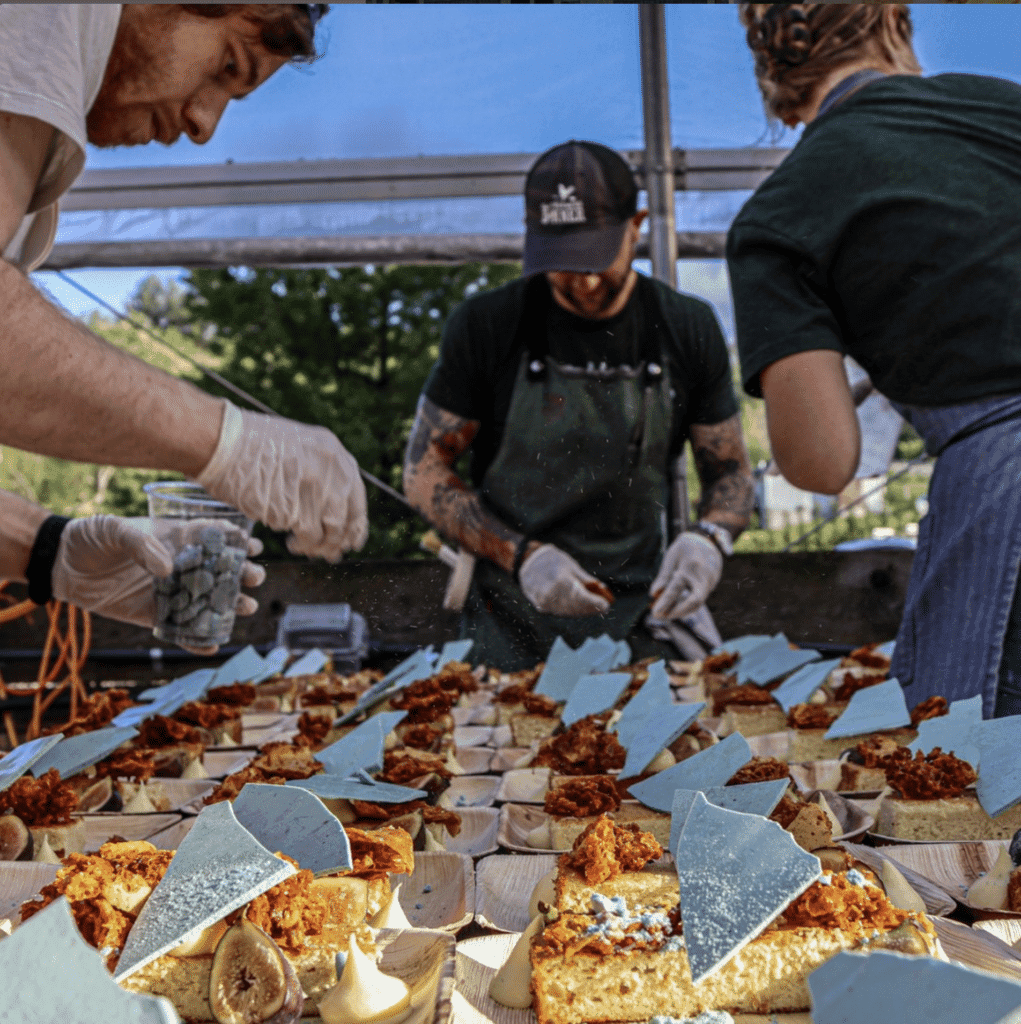
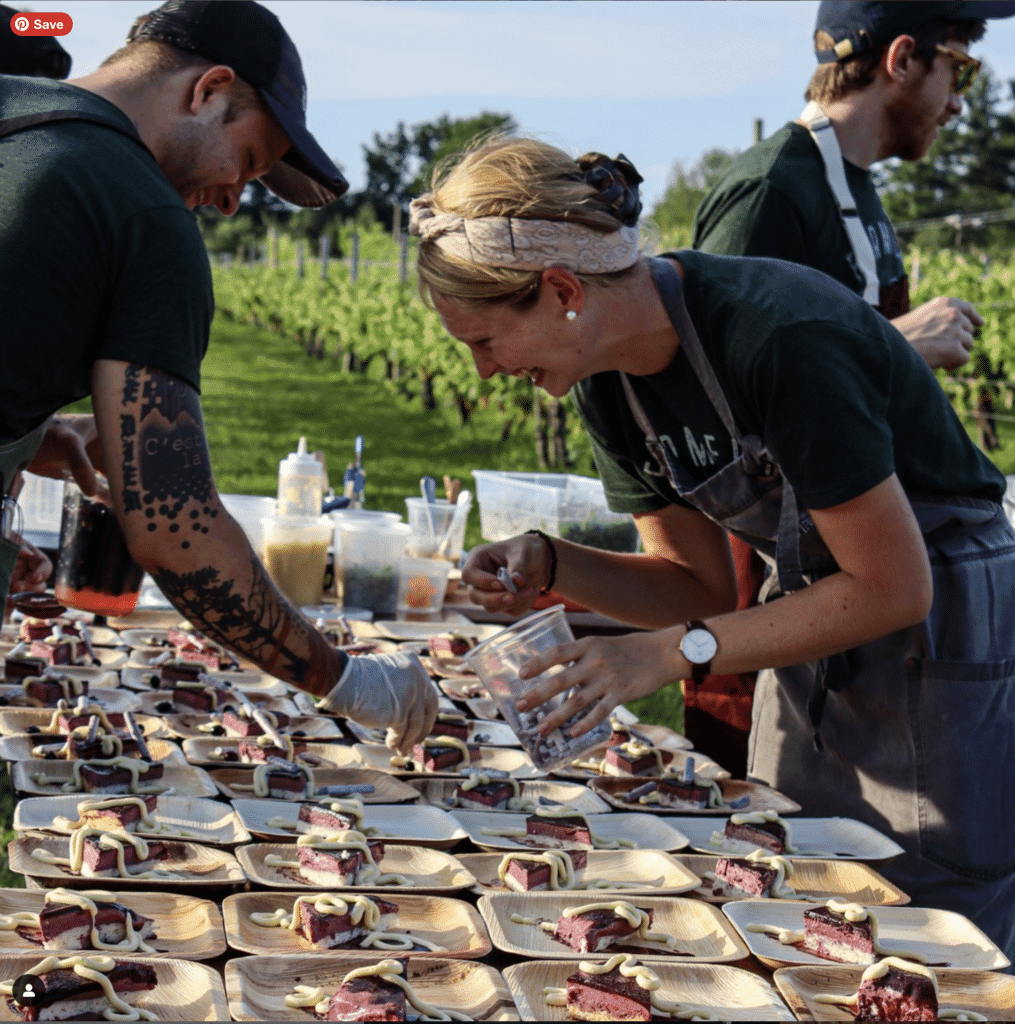
The Farmer’s Dinner was really born out of frustration. Running a business is much like raising a child; you must constantly protect it. Leaving it even for a day can lead to disaster. But I was driven to nurture this concept because it was simple and needed: it had to benefit the farmer. We aimed to support local agriculture genuinely, not just by adding a “locally sourced” salad to the menu. Instead of just being farm-to-table, we wanted to bring tables to the farm. This was crucial because if guests feel uncomfortable on a farm, they’re unlikely to buy directly from one. Many people feel intimidated by unfamiliar things. If we could entice them with the promise of great food and introduce them to the farmers—like showing them the upper field that grows fantastic blueberries and dedicating a course to that—we could make an impact. Our margins are tight, and establishing a business like the Farmers Dinner was challenging with the high labor and costs of sourcing food directly from farms. We had to figure out how to maintain integrity and sustainability for our company, our customers, and the farmers. These two principles have been our guideposts for the past 12 years.
How long did it take in the beginning? I’m sure it was a rocky start with some losses. When did it become sustainable as a business?
It took about five or six years before I felt this was the company I had always envisioned. However, I recognize that this company has continually evolved alongside me. The person I was 12 years ago vastly differs from who I am today. Initially, I couldn’t showcase food from the subcontinent at the Farmer’s Dinner. But our guests were willing to come along for the ride and embrace this evolution. I’m eternally grateful to those who supported us and believed in my vision—on my best days, perhaps I am a visionary, though some days I might just be crazy.
Why do you think it’s essential to maintain close contact with your ingredient providers and sources? How has this changed your relationship with the food you consume and provide?
The most significant shift for me, working closely with all these wonderful farmers, is realizing how fragile our food system really is—it hangs by a thin, almost invisible thread. If the trucking industry were to collapse, so would our food supply. Yet, using doom and gloom as a motivator is ineffective and unhelpful. Instead, I prefer to focus on how farmers are the unsung heroes of our communities. Everyone should have a garden. Growing things teaches us to trust the process, discover patience, and understand the natural cycles of life and food. It’s hard to appreciate farming if you’re not a farmer. But if you understand crop cycles and how torrential rain can destroy all your hard-grown tomatoes, you gain a level of patience and respect that most consumers lack.
Is inspiring people about everyday vegetables also a goal of your cookbooks?
Absolutely. I write for home cooks, not chefs. The chef world is incredible, and I love it, being very much a product of that environment. However my goal is to teach home cooks a few techniques and to foster an appreciation for simple ingredients. If I can make someone say, “I never imagined zucchini could taste this good,” then I’ve succeeded. Zucchini can be as satisfying as a T-bone steak if you approach it with inspiration and passion. This approach opens up new ways of cooking and enjoying food.
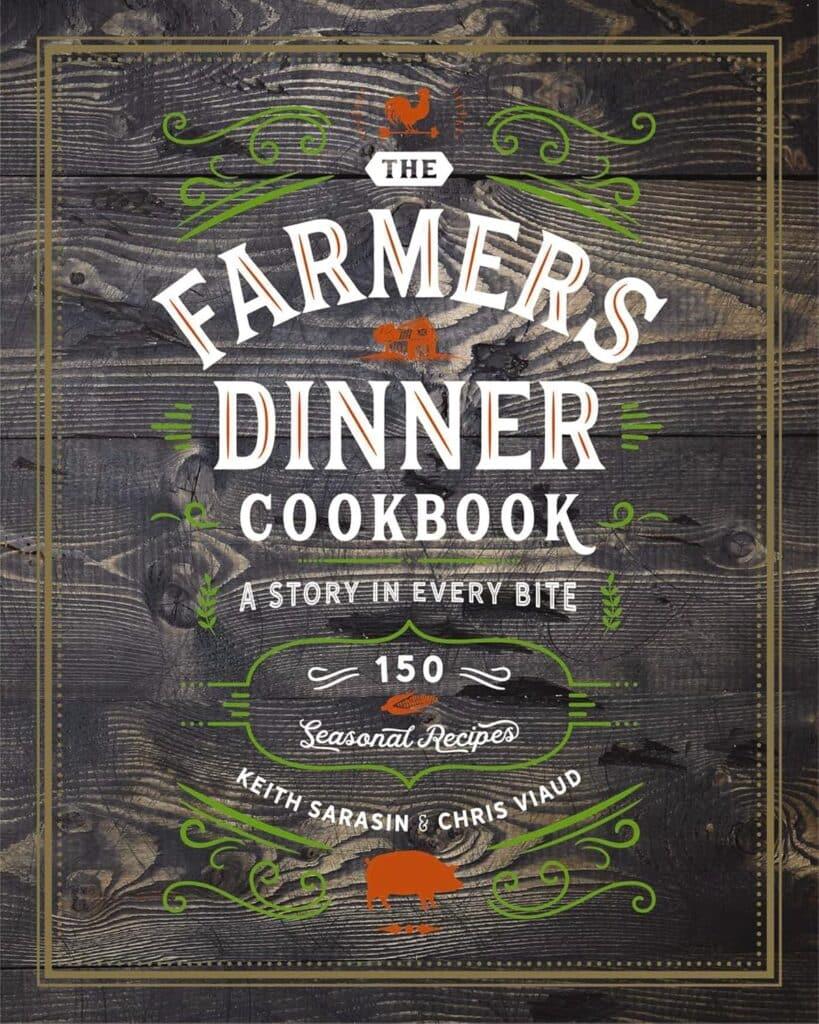
The Farmers Dinner Cookbook: A Story in Every Bite
by Keith Sarasin and Chris Viaud (Cider Mill Press 2019)
Chef Keith Sarasin on Food, Grief, Love
By bridging previous discussions on personal loss and his passion for culinary tools, as seen in his article “Carbon Steel: Lost and Found,” we see how individual experiences and professional practices interweave to shape a chef dedicated to redefining the culinary landscape. This dialogue extends our understanding of Chef Sarasin’s mission to transform how we think about, source, and enjoy food.
|
In 2025, for the first time ever, a portion of EVERY ticket sold will go directly toward preserving farmland.