

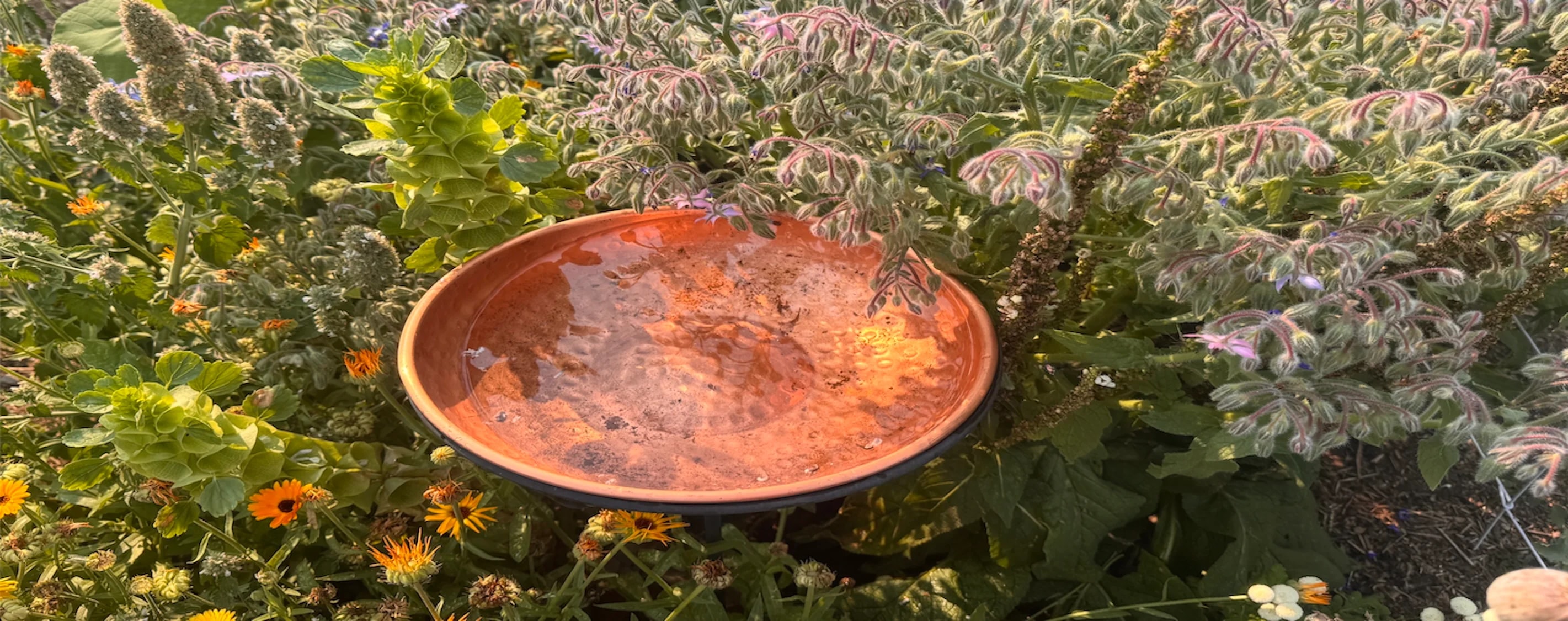
As a coppersmith, I’ve spent most of the time preparing copper items for the kitchen. Sometimes it’s a copper mailbox cover, or a painting box, or even repairing a copper-clad torch that had been used to hold the Olympic flame. But about 95% of the time, my work as a coppersmith is creating or building kitchen tools.
However, I think a place we forget about, where copper is useful, is the garden.
There are a bunch of super fun copper science facts that can be our secret weapon against weather and time, which are often applied to kitchenware, but are not translated to outdoor spaces.
Now, seeing copper used for gutters and downspouts is a sight I’ve noticed, but that’s expensive and not what I mean to discuss here—though the science for using copper on the house is the same as in the garden.
So, number one. Copper doesn’t rust. It can patina and darken with time and exposure to oxygen, but that can very easily be removed with a ketchup scrub or a quick wash in a light chemical cleaner like Tarnax. But it won’t rust away. I’ve seen many a steel or plated garden item get pretty beat up by weather in a single season, but copper won’t.
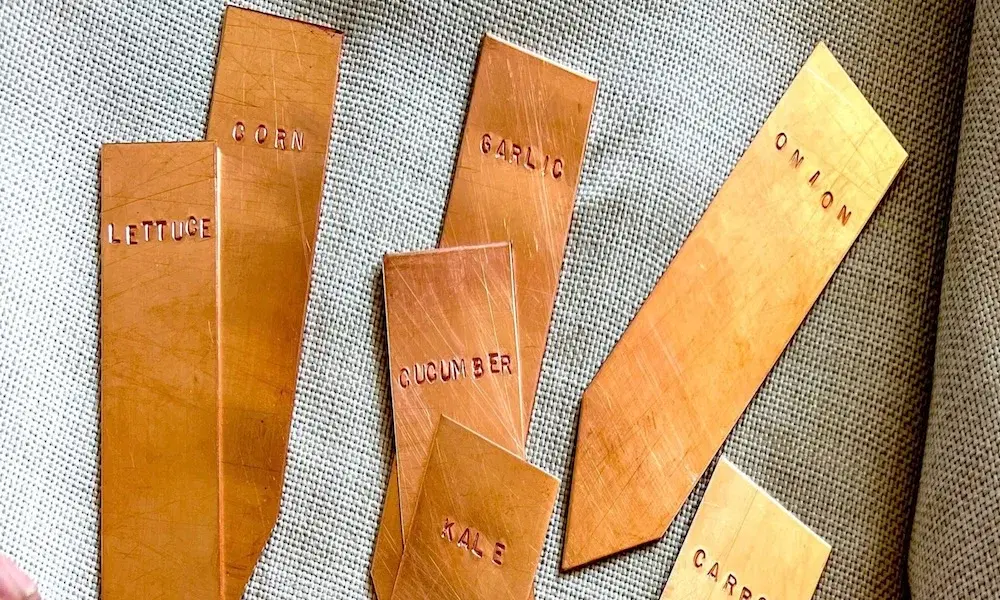
This is why using copper for something like garden signs, or labeling seed locations in a vegetable garden are so great. The stakes can be pulled at the end of the season to be re-used. Unlike other metal stakes or signage, which often rusts out quickly due to exposure to moisture and rain, copper garden stakes can be used every year and revitalized with a quick ketchup bath, or rinsed with vinegar, or shined up with chemical copper pastes. They can be used and re-used indefinitely.
Number two. Copper doesn’t hold bacteria or viruses. It is what is called a “contact killer” and this has been studied extensively and reported in American Science journals and abstracts. It’s been discovered that when copper and oxygen are co-existing, bacteria and viruses cannot reproduce. Pure copper surfaces, therefore, find themselves self-cleaned of all germs in roughly six hours. This is different from stainless, which can hold some germs for up to twenty-one days.
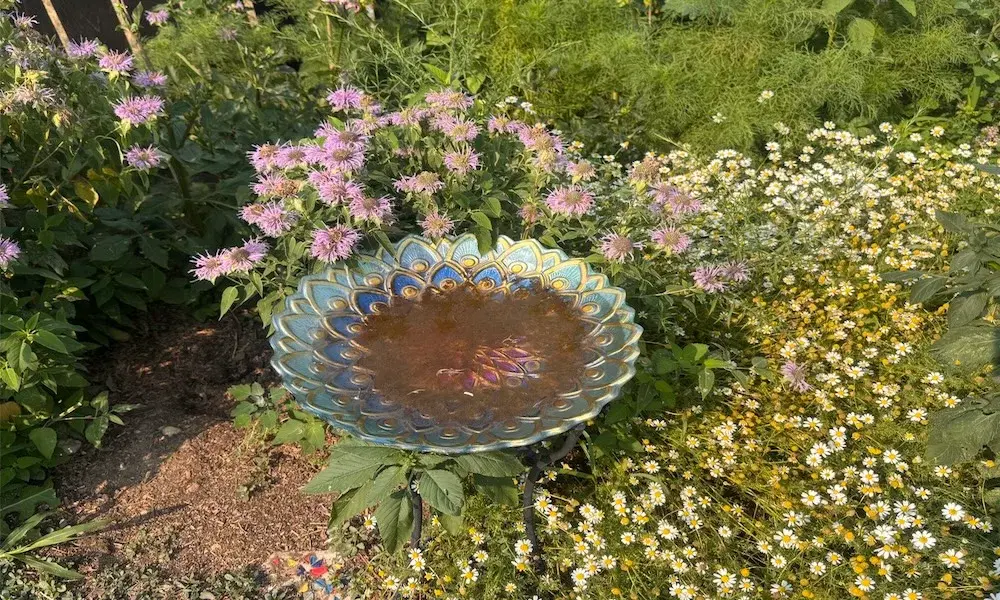
As you might know already, if you have bird baths, they can get yucky pretty fast. There are bugs that fly in and decay, and many birds show up to wash and poop in them. I have a glass one right now that gets black super fast, simply because of the bugs and birds in and out of my garden. Bird baths that have running water can usually keep clean enough, but I’ve had ones where the filters get full of green gunk even when it’s running nonstop. This is because of the very natural and expected build-up of bacteria and other organics.
A bird bath made of copper, however, not only doesn’t rust, but also doesn’t get full of bacteria and it definitely doesn’t allow green build-up, either. It’s a self-cleaning garden fixture for me, because I never have to scrub it out like the glass one. It stays pure clean copper all year long, no matter what.
Number three – it’s shiny and sparkly, and can be used in swirly garden décor to deter pests like deer and other animals that don’t like moving, bright objects. (I also sometimes use tinfoil for this – such as strips of tin foil in my entry alcove to keep the swallows from building a nest in the wreath of our front door!) And because it can be revitalized over and over with organic or chemical cleaners, it never stops being annoying for those unwanted garden visitors.
And lastly, number four. (My husband says ‘there’s always four!’) This one is where I’m just biased and it has nothing to do with science. I just think it’s pretty. I’m a coppersmith, so obviously I love the material I work with, and have a fondness for the metal I live with. But in my opinion, it’s just a lovely little touch to add some shine to our green spaces. And, copper is one of the elements on the periodic table, so it’s all-natural. Just like our green growing spaces!
Sending love from my garden to yours!