


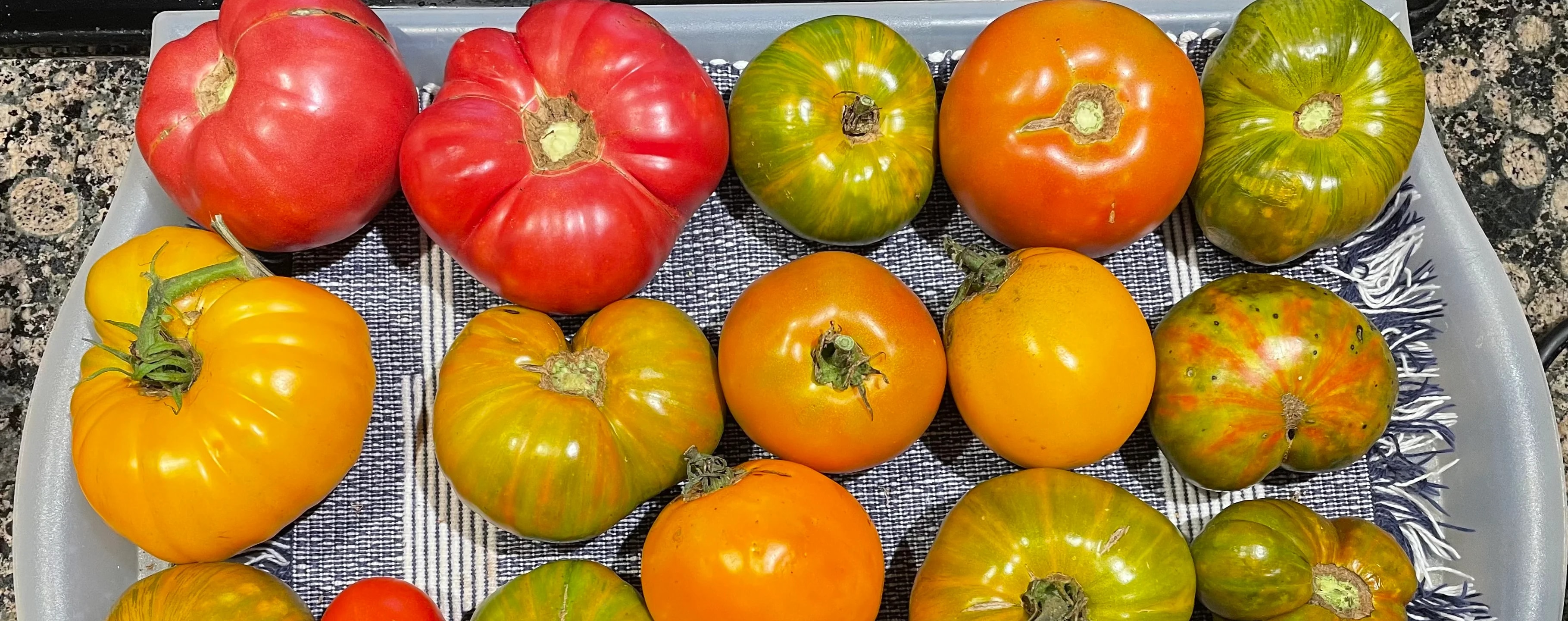
Walk through a summer farmers market or browse a seed catalog and you'll quickly discover that tomatoes are anything but ordinary. They aren't just red anymore, and they certainly don't all grow the same way. Some plants stay neat and tidy while others seem determined to take over the garden. Some tomatoes are bright yellow, deep purple, almost black, striped, green—even white! And then there are the names: Mortgage Lifter, Cherokee Purple, Black Krim, Aunt Ruby's German Green, Hillbilly, Mr. Stripey, Purple Bumble Bee, Atomic Grape, and Chocolate Sprinkles.
One of the first things gardeners learn is the difference between determinate and indeterminate tomatoes. It sounds technical, but it's actually pretty simple.
Determinate tomatoes are the "get-it-done" plants of the tomato world. They grow to a certain height—usually about three or four feet—set most of their fruit over a few weeks, and then they're finished. If your dream is making gallons of spaghetti sauce, salsa, or canned tomatoes in one big weekend, determinate varieties are your friends. Favorites include Roma, Celebrity, and San Marzano.
Indeterminate tomatoes, on the other hand, are marathon runners. They just keep growing, flowering, and producing tomatoes until the first frost finally calls it quits. Give them a sturdy cage or trellis because some can easily reach eight feet—or more! Most of the best-known heirlooms fall into this category, including Brandywine, Cherokee Purple, Green Zebra, Black Krim, and Mortgage Lifter, rewarding gardeners with fresh tomatoes all summer long.
Tomatoes originated in western South America and were cultivated in Mexico long before Europeans arrived. Spanish explorers carried them back to Europe in the 1500s, where people were a little suspicious at first. Because tomatoes belong to the nightshade family, many thought they might be poisonous. Fortunately, curiosity—and hungry cooks—won out, and tomatoes eventually became stars of Italian sauces, Spanish dishes, and gardens around the world. Today there are literally thousands of varieties to choose from.¹²
That's where heirloom tomatoes come in. Heirlooms are open-pollinated varieties that have been lovingly passed from one generation to the next, often for fifty years or more. Gardeners save seeds from their favorite plants, and those seeds grow tomatoes that are true to type year after year. Every heirloom carries a story, whether it's tied to a family, a community, or a place halfway around the world.
You'll also hear the term heritage tomato. Most gardeners use it interchangeably with heirloom. Some seed companies use "heritage" for older varieties with historical significance, but either way you're talking about tomatoes prized for flavor, character, and history—not just perfect supermarket looks.
And then there are the colors. Forget plain red. Heirloom tomatoes come in sunny yellows, glowing oranges, rosy pinks, creamy whites, lime greens, chocolate browns, deep purples, and nearly black shades. Some, like the bi-colored tomato Pineapple or Marvel Stripe, are like little works of art.
Many of those unforgettable names have stories behind them. Mortgage Lifter reportedly earned its name because the gardener who developed it sold enough seedlings to pay off his mortgage during the Great Depression. Cherokee Purple reflects a treasured Southern tradition, while Black Krim traces its roots to the Crimean Peninsula. Aunt Ruby's German Green stays green even when ripe, proving that color isn't always a clue to flavor. Others—Purple Bumble Bee, Atomic Grape, Chocolate Sprinkles, and Mr. Stripey—simply celebrate the tomato's playful side.
Growing heirloom tomatoes is about more than harvesting delicious fruit. They preserve genetic diversity, connect us with generations of gardeners, and remind us that nature can be every bit as colorful, surprising, and full of personality as the names on a seed packet.

