


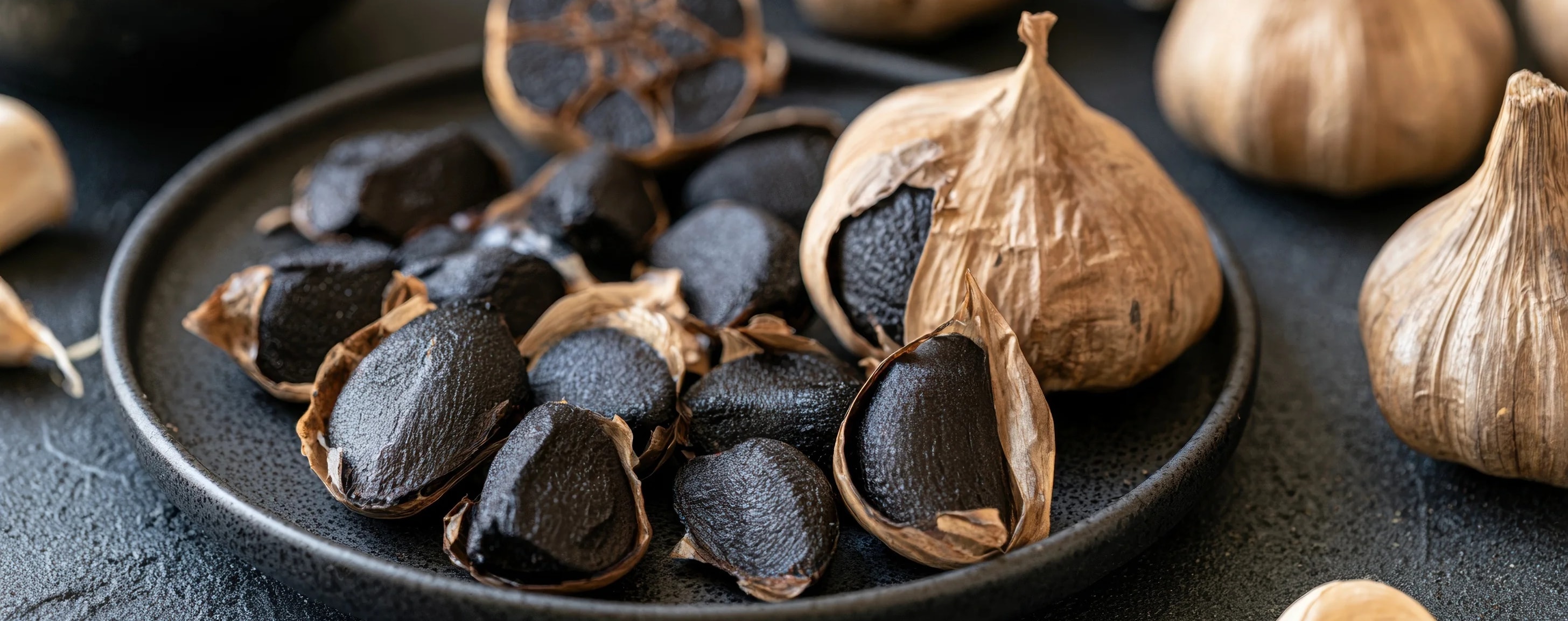
Black garlic starts as ordinary fresh garlic, transformed through a long, carefully controlled aging process. Whole bulbs sit in a warm, humid environment for several weeks until the white cloves turn black, soft, and almost jammy.
Some call it “fermented garlic,” but it is more accurately described as heat-aged garlic. Most of its transformation comes from the Maillard reaction—the browning process that also gives toast, roasted coffee, and seared meat their complex flavors.
As the garlic ages, its sharp bite and strong aroma disappear. In its place is a sweet, tangy umami often compared to molasses, balsamic vinegar, tamarind, dates, and soy sauce. It still has garlic’s savory depth, but it is mellow enough to eat straight from the bulb.
Black garlic works best when it is mashed, blended, or dissolved.
Because black garlic contains natural sugars, it can scorch over high heat. For the best flavor, mash it with a little water, oil, or vinegar and add it near the end of cooking.
Mash a clove onto toast with butter, goat cheese, ricotta, or avocado. Stir it into mayonnaise, hummus, salad dressing, gravy, tomato sauce, soup, risotto, mashed potatoes, or macaroni and cheese. It is especially good with mushrooms, lentils, roasted vegetables, beef, pork, chicken, oily fish, and aged cheeses.
To make a quick compound butter, mash two or three cloves into a stick of softened butter with a pinch of salt. Melt it over steak, fish, vegetables, or baked potatoes—or toss it with hot pasta and Parmesan.
Look for whole bulbs or peeled cloves with no added ingredients.
Black garlic is sold at some supermarkets, Asian markets, natural-food stores, specialty shops, farmers' markets, and online. It is also available as paste, powder, salt, and prepared sauce. Whole cloves offer the most versatility.
You can make it at home, but it takes patience.
Place several firm, unpeeled garlic bulbs on a rack inside a rice cooker, slow cooker, or Instant Pot. Wrap each bulb securely in foil to help retain moisture. Use the Keep Warm setting for approximately three to six weeks, checking after the third week. The finished cloves should be black, soft, sticky, and sweet.
The cooker must maintain at least 135°F (57°C) throughout the process; verify the temperature with a reliable thermometer. Temperatures below this level can create a food-safety risk. Keep the appliance in a safe, ventilated location—the garlic smell can be strong during the first weeks. Commercial black garlic may be more practical if your appliance cannot maintain a steady temperature. Buying a first bulb is a sensible way to decide whether you like it before beginning a homemade batch.
Black garlic powder is easier to sprinkle but usually less luscious and complex than whole cloves. It is useful in dry rubs, popcorn seasoning, roasted nuts, French fries, and spice blends. Black garlic paste is convenient for sauces and marinades, although some commercial products contain salt, oil, vinegar, or sweeteners, so check the label.
Black garlic contains several antioxidant compounds, and preliminary studies suggest possible health benefits. However, research remains limited, so it is better regarded as a flavorful ingredient than a medical treatment.

