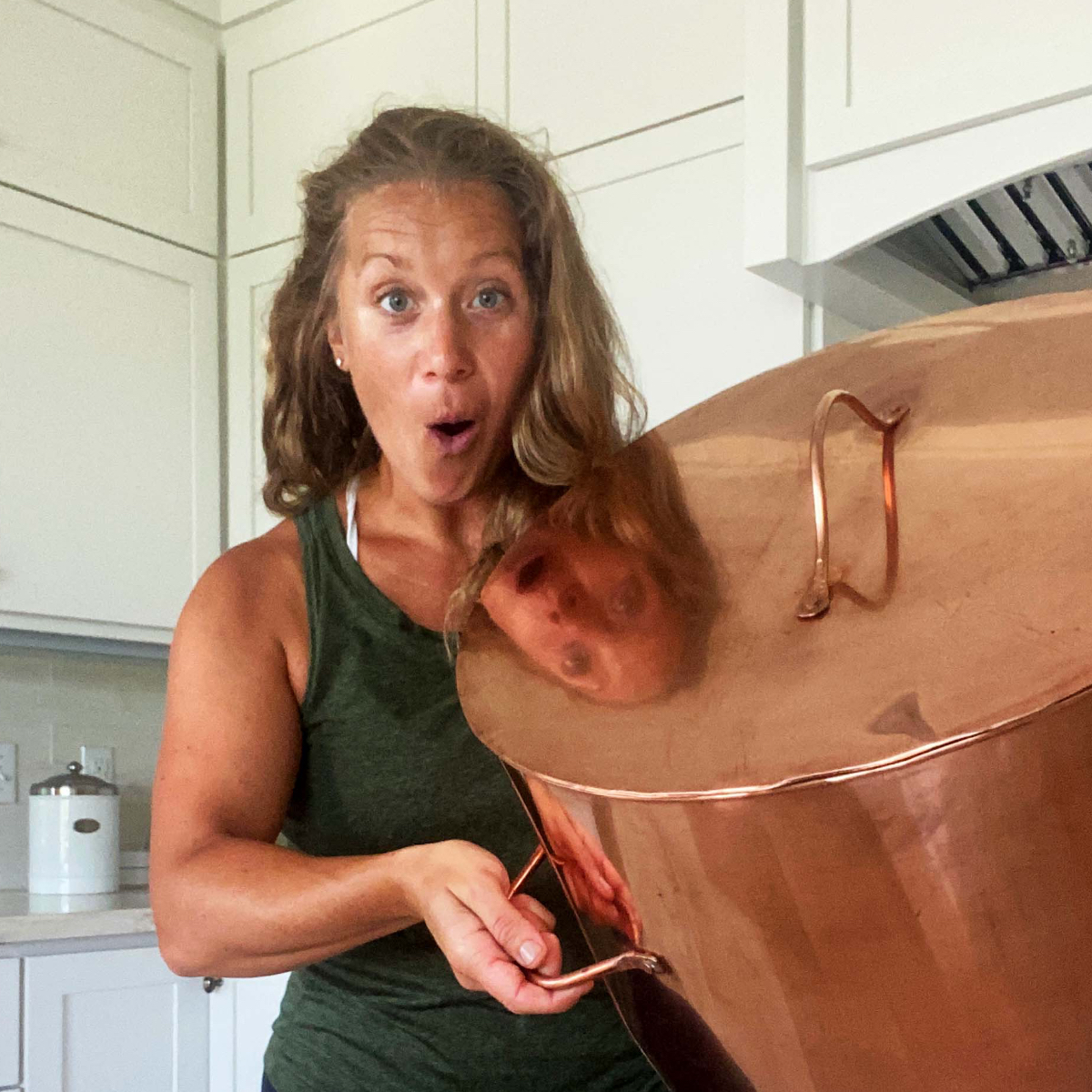

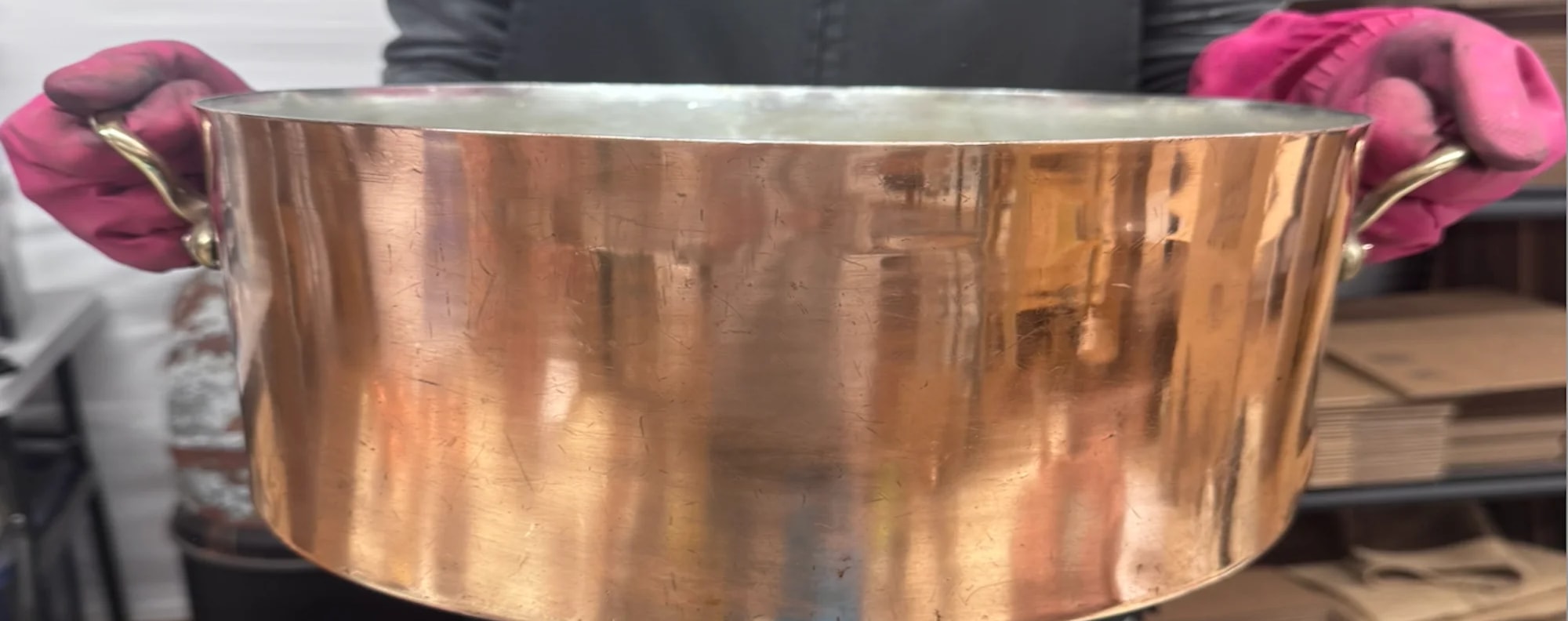
If you don’t collect copper cookware, you may not be familiar with the term “whale” in the industry. It’s similar to how it’s used, say, in Vegas, when the term “whale” means big money, big spender. In copper cookware, the term “whale” means gargantuan pan of epic proportions. The type of piece that likely won’t fit on your stove or in your oven, even if you can afford to buy the piece itself.
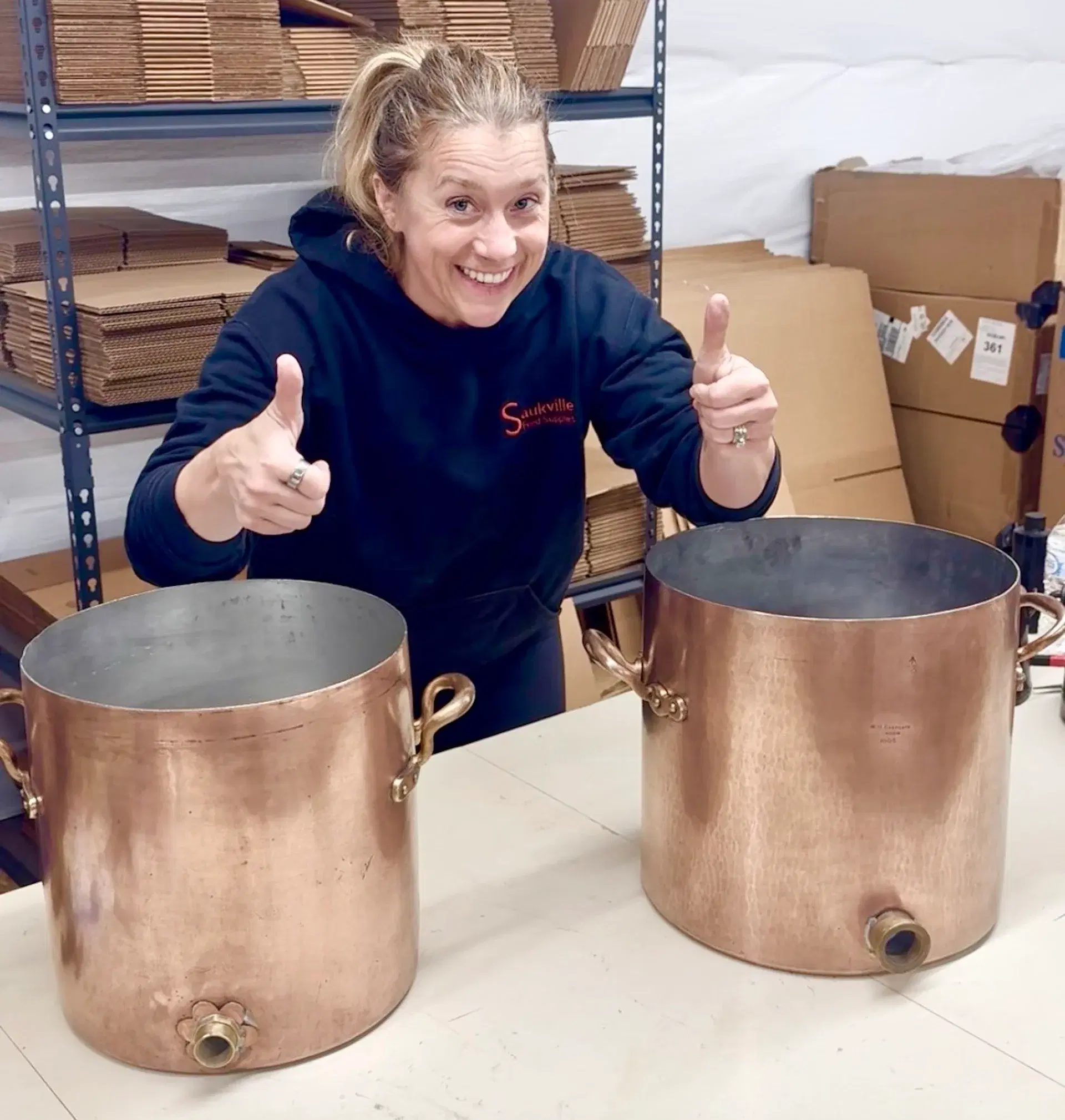
And, like the gold those Vegas high rollers covet, copper cookware aficionados covet whales. Typically, the ideal copper whale is old, vintage, has a maker’s mark and perhaps the crown stamp signifying it came from a royal house in England or France. It may be a specialty size, like a rare jambonnière or turbotiere. Or it simply may be massive, for massive sake.
These pieces are both exciting for me, as a coppersmith and a restorer, and the bane of my existence. When building huge pieces, I have realized very quickly that my 1700s and 1800s tools are not made for 20” diameter pots. When restoring them, I discover that my modern tools, like buffing wheels, are not large enough to accommodate working on the whales.
So I typically look at restoration projects with a combination of glee at getting to work and touch such huge pieces of cookware and deep trepidation.
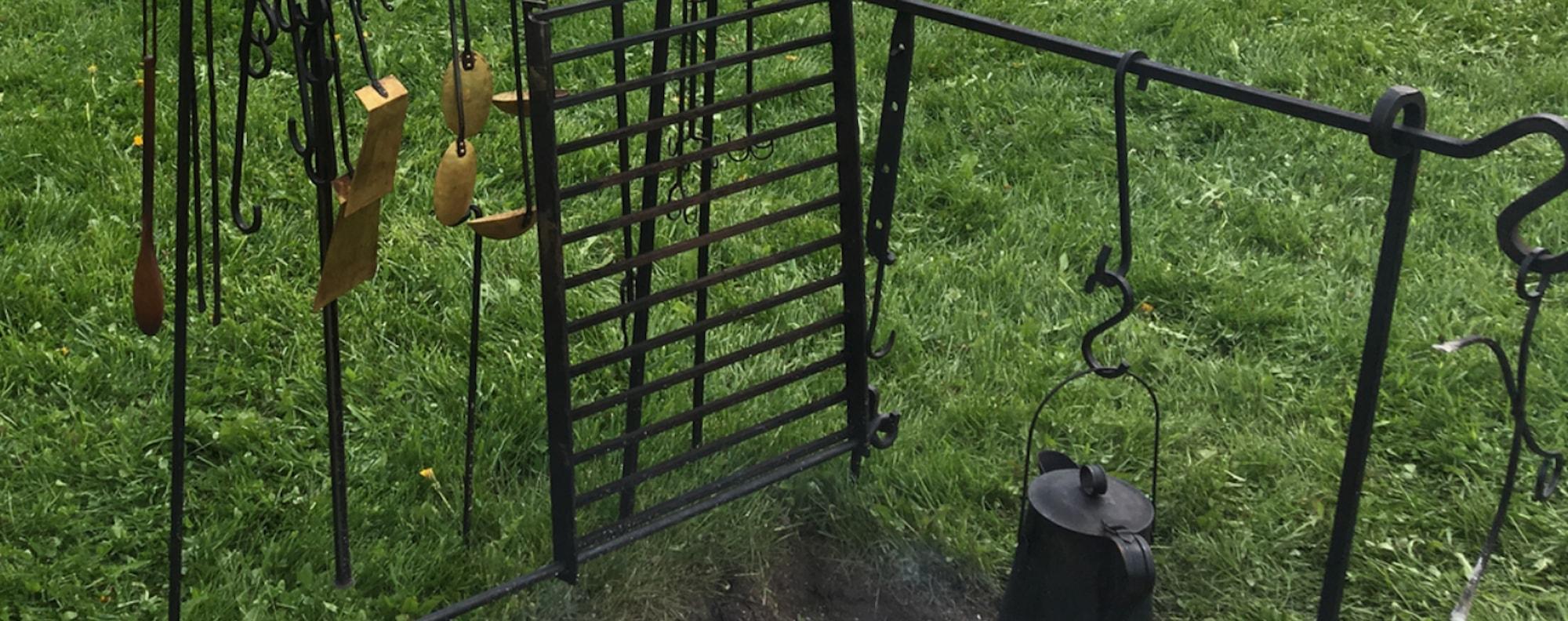
Some restoration projects can take almost a year, as they require removing broken parts carefully and attempting to get rid of ¼” layer of calcified grime on the bottom interiors without compromising the brittle old copper below it. There are grooves that don’t get clean, or 200-year-old oil burrowed under handles that I can’t access. There are dents that refuse to come out, or extra pieces that fall off during retinning. Retinning itself can mean going over a piece five times over an open 600F fire, which is barely big enough to hold the pot itself.
And then there’s the lacquer.
Many people don’t realize their vintage copper cookware is covered in lacquer, and it’s often hard to know until one heats it up or you cook with it. What’s doubly hard is that I often cannot tell if something has lacquer on it, but over a tinning fire, the lacquer bakes on black. Once that happens, it’s like having burnt nail polish on the copper, which doesn’t come off with the typical light chemical agents I typically use to remove oxidation from the tinning fire on other pieces.
So, removing lacquer becomes a terrible, dirty, careful and long job to get down to the pure copper. I’d love to do this process before retinning, but there’s no sense in doing that process ahead of time in case something isn’t covered in lacquer. And there are times it’s truly impossible to tell either way.
When there’s a new custom build, I don’t have to worry about lacquer or whether some of my tools are big enough to handle some of the modern needs of restoration work. But I do have to worry about the size of the build itself, and whether the tools can accommodate the processes. This often means rigging things up like stools under some of the tools to hold the oversized diameter as the seams are connected. It may mean being unable to use the jigs and fixtures I use for typical sized builds, so I have to rig up something on the fly to rivet on handles, for example.
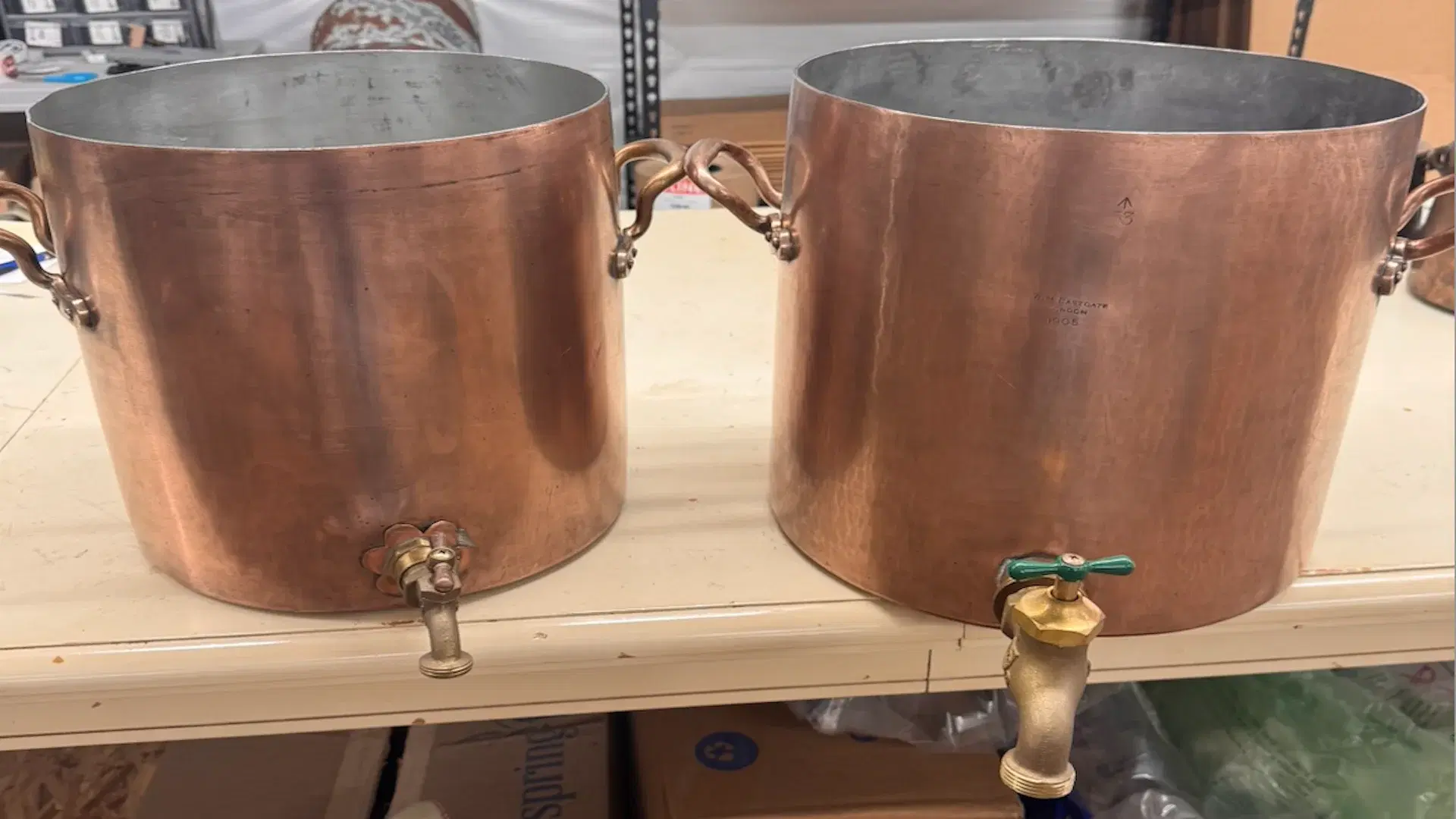
At the same time, working on whales, and restoring them, is one of the most rewarding parts of coppersmithing. Whether they go to work on someone’s stove or are given a place of honor in a collection, I know it’s always worth the trouble, as there are so few people who can do this type of work. It’s an honor, as well as a challenge.
And what are whales, if not a challenge?