
The "Dutch Omelette" is an intriguing example of how the Parsi society took European colonial influences and transformed them into a distinct, multi-layered comfort dish. The dish's name and structure come from a combination of colonial history, culinary adaptation, and the Parsi love of eggs.
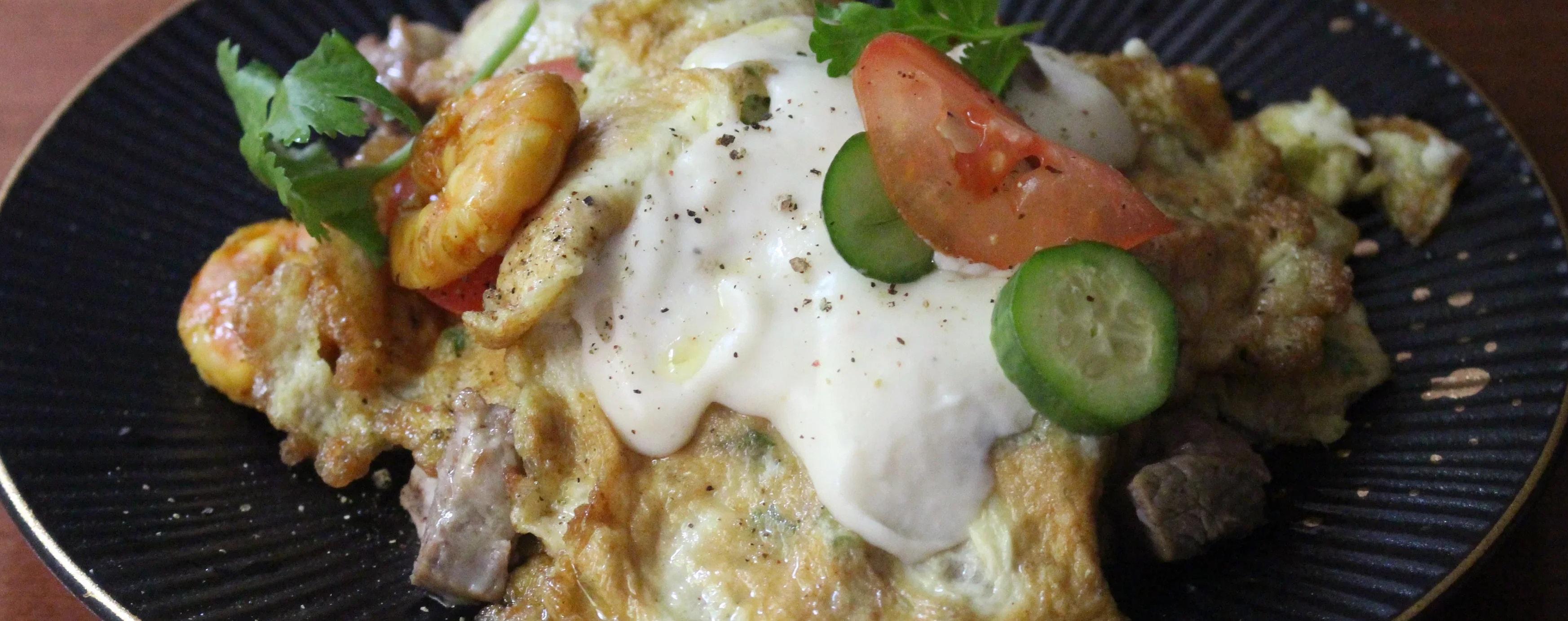
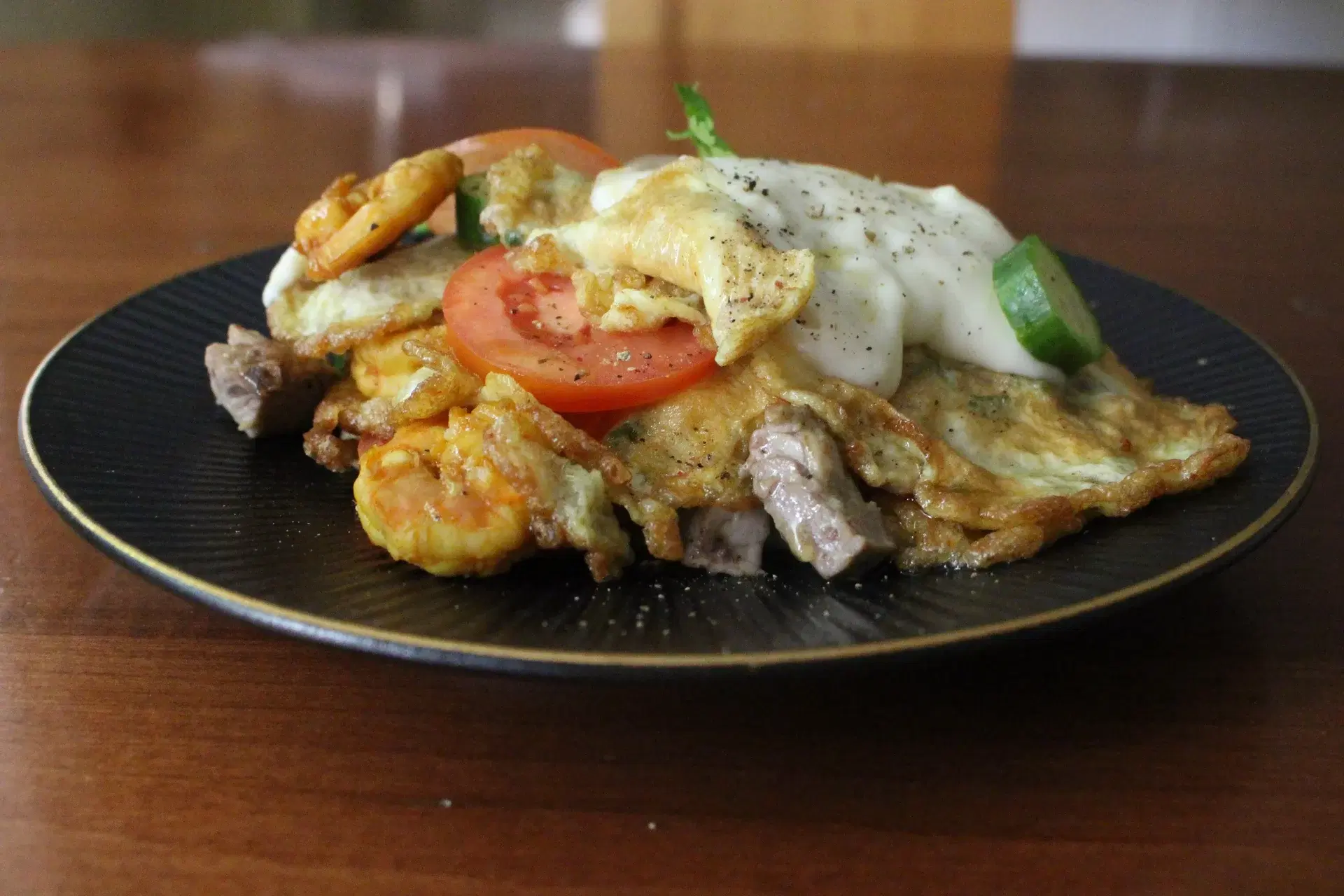
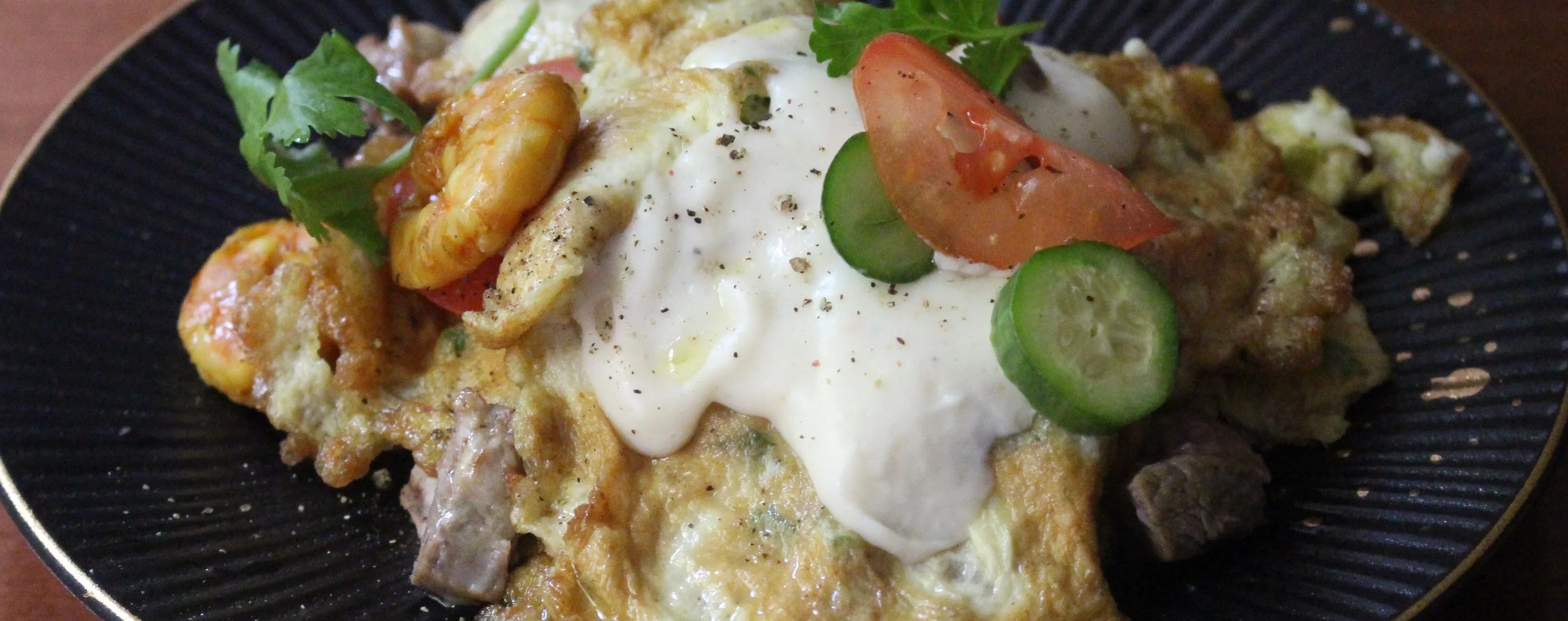
The dish, Parsi Dutch Omelette, is made in several layers – prawns, mutton, fresh tomato and cucumber slices, alternated with béchamel sauce (with and without cheese) that binds it together between layers of Parsi poro – a flat, pan-fried omelette with diced vegetables: onion, tomato, coriander and green chillies mixed into beaten eggs. Tomato and cucumber create a crisp, juicy, and revitalising contrast that breaks through the strong richness of the heavy meat and creamy layers. Eaten warm, it can be baked or slow-cooked in a deep “Dutch oven” pan—no pun intended—allowing the flavours to combine.
What makes it so Dutch? The term "Dutch" refers to the commercial posts built by the Dutch East India Company (VOC Vereenigde Oostindische Compagnie, literally translated "United East India Company", established in 1602) along Gujarat's coast in the 17th and 18th centuries (mostly in Surat and Bharuch). The Dutch and British introduced us to the concept of savoury, flour-thickened white sauces, particularly the French Béchamel, which we call “white sauce”! Layering meat, savoury sauces, and vegetables baked or slow-cooked in a thick pan closely resembles classic European comfort food, such as the Dutch baked scrap-casserole Filosoof prepared from leftover roast meat. The traditional Dutch Boerenomelet, or farmers' omelette, is made with fresh garden vegetables and meats such as gammon and bacon, but it is a thick-layered egg casserole rather than a folded egg pocket.
The recipe for Dutch Omelette, which is eggs with peas and ham, layered with asparagus in a cheese sauce, was first published in a cookbook by a prominent Parsi lady named Sehra Albless in 1956. These recipes were learned from the wives of European diplomats and executives of multinational companies operating in the region and are often labelled as 'continental party fare'! While the same recipe is reprinted in The Time and Talent cookbook, a compilation of recipes contributed by members, I have grown up on this version of it that I am sharing. It may have been a concoction of my aunt Villie, a key member of the T&T Club, and a cookery instructor who often created her own legendary recipes.
One might anticipate a variation of the Dutch omelette in the renowned Vividh Vani, the prominent 19th-century Parsi cookbook, since the meal reflects historical culinary blends resulting from early interactions with Dutch traders in Surat. But instead, there is just a sweet version of a stovetop omelette made with milk, fine wheat flour, castor sugar and a smooth pulp of orange murambo which tastes more like the contemporary 'Dutch Baby' pancake – the puffed, popover-like structure made in the oven. While the Parsi Dutch omelette corresponds to the concept of an 'omelette' as we know it, it is frequently made with leftovers, reflecting the traditional waste-not-want-not philosophy of our cuisine. It is an excellent illustration of low-cost, simple home cooking, with all of the Parsi culinary classics!
Parsi "Dutch Omelette"
Prepared with the classic Parsi poro-omelette. This dish is a creation of our influences during colonial times. The wives of European diplomats and executives of multinational companies had elite clubs for the expats who hosted luncheons. This group frequently included Parsis. They then extended an invitation to these women to become members of their Time & Talent Club, which proudly produced gourmet food that they liked to label as "continental fare".
Ingredients
Omelette
- •8 eggs, well beated
- •8 green chillies, finely chopped, remove the pith and seeds for less heat
- •1/2 cup tomato, fresh and finely chopped
- •1/2 cup onion, finely chopped
- •1/8 tsp salt
Béchamel sauce
- •3 oz butter
- •3 tbsp all-purpose flour
- •3 cup whole milk
- •3/4 tsp salt, add more to taste
- •3/4 tsp black pepper, freshly ground- adjust to taste
For the filling
- •1 cup small pieces of mutton or lamb, braised or boiled, or left over roast meat
- •1 clove garlic
- •1 sliver ginger
- •1/4 tsp salt
- •1/2 lb shelled prawns, pan-fried or poached
- •1 firm tomato, remove the seeds
- •1 cucumber, sliced


Preparation
Prepare the omelettes
In a bowl beat the eggs and add the ingredients. Prepare 4 omelettes of 8–9-inch | 23 cm rounds.In a skillet, heat a teaspoon of oil and pour 1/4 of this mixture. Cook to a golden brown. Repeat to make 4 omelettes. Keep aside.
Make the béchamel sauce
In a pan melt the butter. Add the flour and let it sizzle, cook it for 3 minuts, stirring it well. Lower the heat and add the milk, mix it with a whisk to keep it smooth. Continue cooking, until it comes to a boil. After a minute add salt and pepper.
Braise the meat with salt and a piece of ginger and garlic. Add water and cook the meat until tender and the water has evaporated.
Poach, boil or panfry, 250g or 1/2 lb of shelled prawns.
Slice a tomato and a cucumber, and lightly sprinkle them with salt.
Assemble in an oven-proof dish
Layer the ingredients,starting with an omelette, and ending with the sauce on top alternating all of the fillings with the omelettes and the white sauce.
When ready to serve, bake this in a preheated oven at 350 F or 165 C for 15 minutes until warmed through.