
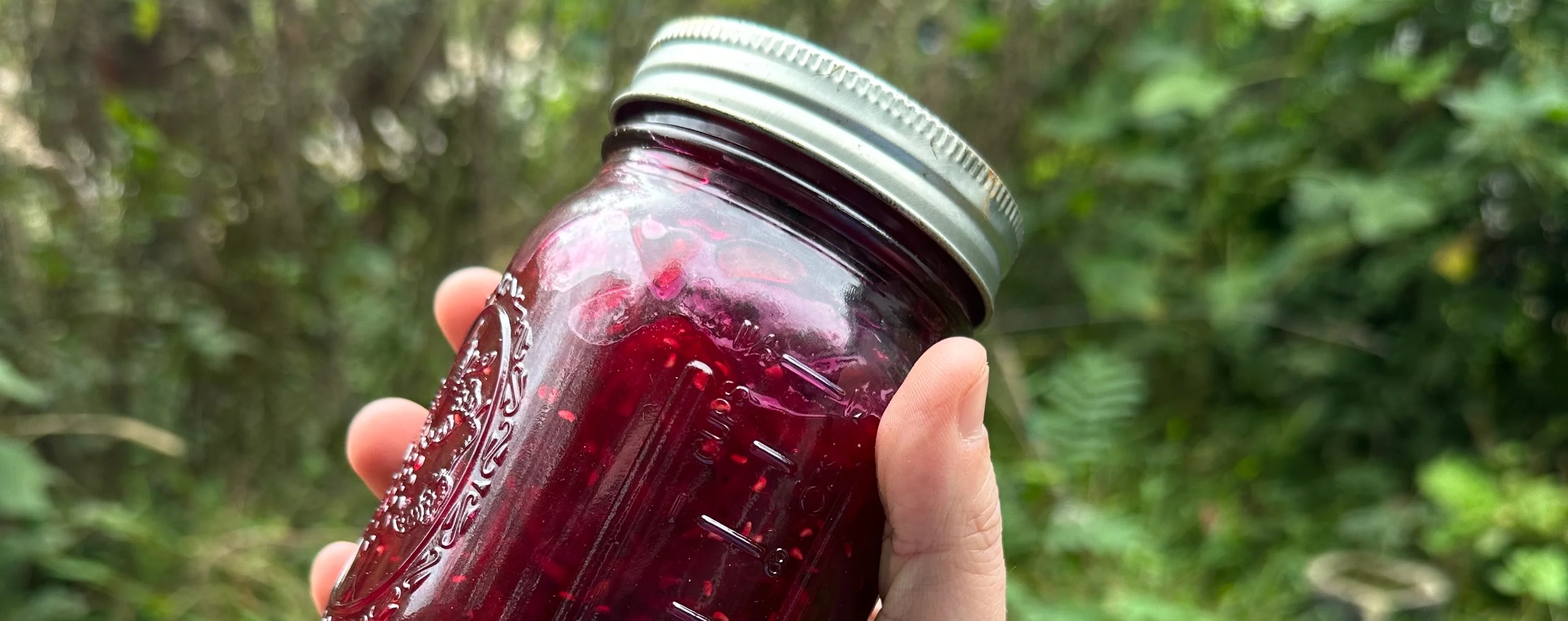
The end of summer brings an abundance of fruit to my garden and grocery store, and as a perpetual over-buyer of scratch and dent produce, I regularly have to put my creativity to the test in order to make sure none of it goes to waste.
As always, if you’re canning these foods, be sure to follow recipes in Essential Food Preserving or another tested, trusted resource. But if you’re just making your preserves to store in the fridge and use relatively soon, you can be a bit more footloose and fancy free with the measurements (just note that less sugar and other preservatives leads to a shorter shelf stable period).
Here are some of my favorite ways to work with an abundance of fruit that’s about to go bad:
Make condiments, like fruit syrups or fruit-infused vinegars:
Yes, you can make more complex condiments too (like homemade ketchup and mustard with peaches or berries), which is also a lot of fun, but these are simple, accessible options that work even when time and energy are in short supply.
Fruit syrups couldn’t be simpler, and while there are dozens of ways people like to make them, one of my favorites for refrigerated syrups is:
Chop up 2 cups of fruit, and add to a saucepan with ½ cup water and 1 cup sugar and a pinch of salt. Simmer over medium-low until the fruit breaks down and you’ve got a nice, syrupy consistency. You can add more fruit, water, or sugar to adjust to your tastes as you wish.
You can leave it as is, or you can strain it through fine mesh to remove pulp and seeds.
Allow to cool completely before storing in an airtight container in the fridge, where it will last a week or more (again, depending on how much sugar to fruit you have in there).
Infused vinegars take just minutes to make.
You can steep them on the stove if you would like (add fruit and vinegar to a saucepan and heat over low heat to infuse), but I prefer to infuse without heat because the flavor of the fruit feels brighter.
To make your own, add fruit to a nonreactive container, like a mason jar, leaving at least one inch of headspace, then add your favorite vinegar to cover completely, making sure the fruit doesn’t float to the top (this is a great place for a fermentation weight). Allow to steep out of direct sunlight or in the fridge for at least a week. Strain, then store out of direct sunlight.
Safety note: If you use a lot of watery fruit, it can reduce the acidity of the vinegar and lead to pathogen growth. Either use less of this fruit in your vinegar infusion, or steep and store in the fridge.
Vinegar infusion is perfect for low waste cooking and for making shrubs (basically, sweet and sour drinking vinegars which are a great mocktail add-in). More on all of that in the next issue!
Make jam or jelly:
Jelly can be a bit more finicky, but making jam to store in the fridge is as easy as rapidly boiling chunks of fruit or whole berries with sugar until it coats the back of a spoon, then letting it cool and refrigerating it. Remember as always, if you’re canning, to use a canning-safe jam recipe.
I have dozens of jam recipes in Essential Food Preserving, but also check out these recipes for pineapple jam, slow cooker yellow plum jam, and even tomato preserves.
For these, soft and less-than-perfect fruit are all ok because you aren’t preserving whole pieces. That means if you have to cut off bits of the fruit, or it doesn’t have a great texture, you can still put it to use. Just be sure to not use fruit that’s moldy or otherwise unsafe to eat.
Freeze your fruit (without it forming into one giant clump when you do):
Freezing fruit deserves its own column (which I’ll share with you soon), but here’s my basic go-to method for preventing fruit from sticking together when it freezes.
Basically, take a lipped baking sheet and line it with a Silpat (silicone baking liner). Wash and thoroughly dry your fruit, then pit or slice if needed (leave berries whole, but things like peaches do best sliced rather than whole). Spread out in an even single layer on the sheet, not touching each other, place the pan in the freezer, and allow to sit until frozen completely through. Transfer your fruit to a freezer-safe, airtight container.
Finally, let your creativity take the wheel:
Improvise, combine flavors you like, and experiment just for the pleasure of it. An abundance of ingredients allows us some wiggle room to play, and fruit is perfect for this because you can make unexpected sweet and savory combinations.
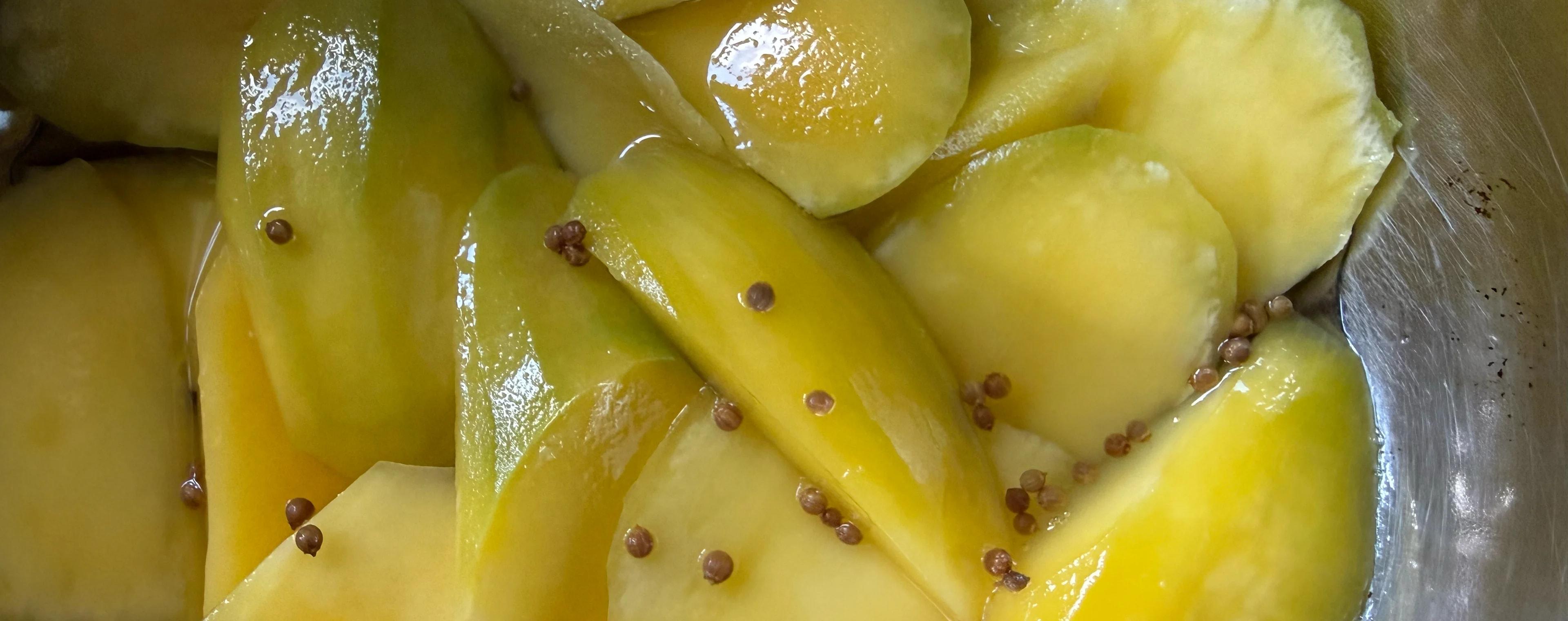
My mango coriander sauce recipe, which I’ve adapted a version of here from my original in The Fermentation Oracle, is an example of one of my experiments (and is perfect for your ripe mangoes). Blessed with a flat full of dozens of mangoes, I found myself running out of my usual ideas (like syrups) and became curious about doing a bit of savory fermentation.
The result is smooth, light, and delicious, with a balance of sweet, savory, and salty. The key is to keep the fermentation short for a sweeter result.
Mango coriander sauce

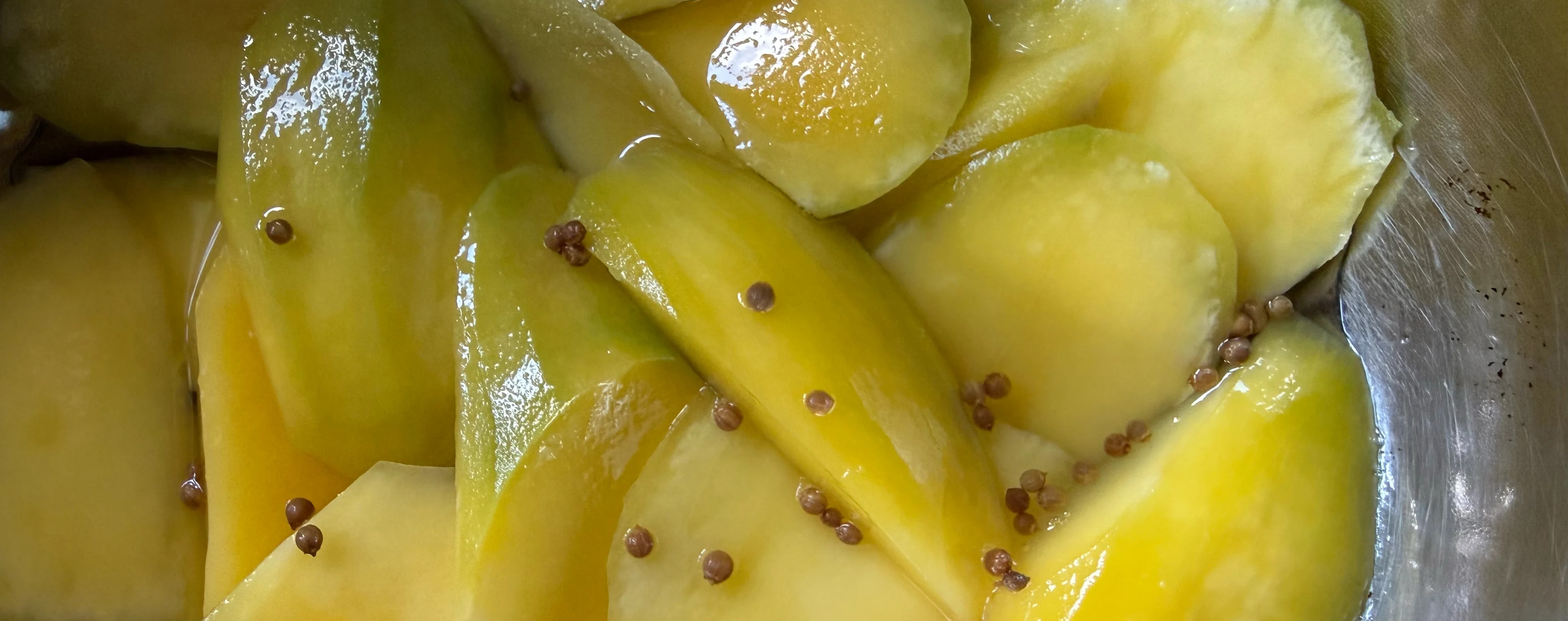
This sweet and salty, lightly fermented sauce is great over yogurt or ice cream, or an unexpected addition to ceviche and other fish dishes (it’s also nice just with cheese and fruit). For a sweeter flavor, ferment for just a couple days: If you want it more sour and funky, let it go for longer.
*This sauce will separate in the fridge. Just shake or stir to combine before using.
Ingredients
- •1/2-1 tsp whole coriander
- •3 whole mangoes, peeled, pitted, and cut into 1” cubes
- •1/2 tbsp sea salt or Himalayan salt
- •1 quart water


Preparation
Place your coriander seeds in a packet so they're easy to remove later: reusable spice bags, paper tea bags, or several layers of cheesecloth tied at the top with twine work great for this.
Combine your ingredients in a large jar or crock.
Cover and allow to ferment for 2-4 days, stirring gently twice a day.
When you're ready to make your sauce, remove the coriander packet and discard
Pour mango and brine in a blender (use only half the water for a thicker sauce) and blend until smooth. Serve chilled.
Can be stored in the fridge for 1-2 weeks.